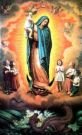
Please pray for our bishops -- Archbishop Nienstedt as well as Archbishop Flynn and Bishop Pates.
God, eternal shepherd,
You tend Your Church in many ways and rule us with love.
You have chosen Your servant, John, to be a shepherd of Your flock.
Give him a spirit of courage and right judgment,
a spirit of knowledge and love.
By governing with fidelity those entrusted to his care,
may he build Your Church as a sign of salvation for the world.
Through Christ our Lord. Amen.
(From the Manual of Prayers, Pontifical North American College , Rome )
Friday, June 29, 2007
Thursday, June 28, 2007
A Brief Course in Breathing with Two Lungs
In honor of the Solemnity of Saints Peter and Paul, Here is an article from Wikipedia summarizing the teachings of Ut Unum Sint (Latin: 'may they be one'), an encyclical by Pope John Paul II of May 25, 1995. Following the prayer of Jesus in the Gospel according to John (17:21-22), it dealt with the relations with the Orthodox Church and other Christian churches. This document reiterated that unity of the two sui juris churches is essential, as well as further dialogue and unity with the Protestant churches.
This document shows that the Roman Catholic Church is officially moved to unity. It has become a common piece of study in ecumenical classes.In paragraph 54, we find the oft-quoted sentence: "In this perspective an expression which I have frequently employed finds its deepest meaning: the Church must breathe with her two lungs!"
In paragraph 79, we see five subjects that are considered important for "more clear" understanding that will bring unity:
1. The relationship between Sacred Scripture, as the highest authority in matters of faith, and Sacred Tradition, as indispensable to the interpretation of the Word of God;
2. The Eucharist, as the Sacrament of the Body and Blood of Christ, an offering of praise to the Father, the sacrificial memorial and Real Presence of Christ and the sanctifying outpouring of the Holy Spirit;
3. Ordination, as a Sacrament, to the threefold ministry of the episcopate, presbyterate and diaconate;
4. The Magisterium of the Church, entrusted to the Pope and the Bishops in communion with him, understood as a responsibility and an authority exercised in the name of Christ for teaching and safeguarding the faith;
5. The Virgin Mary, as Mother of God and Icon of the Church, the spiritual Mother who intercedes for Christ's disciples and for all humanity.
Now that wasn't THAT difficult, was it? Deep, but not difficult.
Saints Peter and Paul, Pray for Us
June 29th.The Solemnity of Saints Peter and Paul . ... a feast celebrated by both Eastern and Western Christians to honor the two Apostles who were martyred at Rome.
Today's feast is the benchmark for any experience of conversion. These two men gave up their lives, lived to their deaths, for what they believed. Any faith worth living for is also worth dying for. The Roman Catholic faith IS just such a faith.
On this very feast day fifteen years ago in 1992 I was sitting in the choir stalls of St John's Abbey, Collegeville Minnesota. As a Lutheran Pastor I was attending a continuing education class at the School of Theology. As a personal devotional exercise I was also participating in Daily Prayer with the monks of the Abby.
I remember very clearly the moment during prayer when I looked up across the altar at the nave of the darkened concrete bunker-like Abbey Church. I recall very vividly the impression I received at that moment that I would be serving God somehow someday in the Catholic Church.
At first I was frightened. Then over time I began to explore what exactly it would mean to become Catholic. I had long been in love with the Catholic Church, its trappings of liturgy and some of its teachings. But with this bit of self knowledge the long, hard work began.
It was a lengthy journey. It took six full years before I was received into the Church. But the wait and the work were well worth it.
To anyone who is thinking about becoming part of the Roman Catholic Church, I'd say to you today "yo-ho, it's worth all the trouble." As the Servant of God John Paul II said "Be not afraid."
From St Augustine....
"Both apostles share the same feast day, for these two were one; and even though they suffered on different days, they were as one. Peter went first, and Paul followed.
And so we celebrate this day made holy for us by the apostles' blood. Let us embrace what they believed, their life, their labors, their sufferings, their preaching and their confession of faith."
Subordination of women not of God
Subordination of women not of God, cardinal says, stressing role in familyApr 24, 2007
God did not create and does not subscribe to the subordination of women, said an Indian cardinal, stressing the role of women in building a strong family life.
NEW DELHI, India (Catholic Online, 4/23/2007) – In an April 20 address to the participants at the at the Federation of Asian Bishops’ Conferences (FABC) South Asia meeting on women, Cardinal Telesphore Toppo, president of the Catholic Bishops’ Conference of India (CBCI), said that both men and women were created in the image and likeness of God and as equals.
“Women have always played an important role both in the family and society,” he said. “However certain traditions gave them a subordinate and hidden place in society.” Highlighting the fact that the subordination of women was a disorder created by human beings, the head of the Indian bishops’ conference said that “God does not subscribe to this line of thought of humans.”
He pointed to gospel accounts that, “among Jesus’ disciples, Mary Magdalene and the other Mary were the first to go to the tomb to look for Jesus and rewarded with the vision of the risen Lord.”“In fact these two women were entrusted with the mission to share this good news with other disciples and thus became the first witnesses of Jesus’ victory over sin and death.” the cardinal said.
Pointing out to another reference in the Bible, he said that even in the Acts of the Apostles a woman called Lydia was the first to respond to proclamation of St. Paul in Philippi and make his missionary efforts possible and fruitful.“God created man in his own image, male and female he created them,” said the cardinal, asserting that since both man and women are created in God’s image they are equal in God’s eyes endowed with equal dignity and destiny.
“Rampant corruption, crime, exploitation, religious fundamentalism, violence, unstable marriages and disappearance of joint families” plague society today, Cardinal Toppo said, urging “women should play an active role in strengthening families.”Noting the impact that changing family values, he pointed out that children are not adequately educated for life at home and an increasing number of children are taking recourse to unhealthy media and Internet.“Love in a family seems to be replaced by a craze for wealth,” he said. “Society itself does not seem to support too much a stable marriage.
”To combat these challenges and evils, he said Catholics need “to open our hearts to the mission, which the risen Lord has given us and in order to understand this mission we have to spend time with the Lord in prayer.”“ It is only by praying that we will understand the world around us and the problems that plague the society. Moreover, prayer would enable us to discern God’s plan and see the role he has chalked out for us, both in the family and the society,” he said.
Cautioning on the spread of evil in society, he said that these evils mean death and destruction to many and we become aware that he commissions us to be the collaborators in combating the forces of evil and foster peace and harmony in the society.Highlighting women’s role in making a difference in society, Cardinal Toppo affirmed that “women are gifted by God with piety and the capacity to influence the world from within and they are called not just to announce, but also to live out the new life, which the Lord has brought to us.”
“God has a distinct plan for each of us and all of us. That is why the Lord brings us here together around the altar to pray together, to reflect on Word of God, receive the Bread of Life and be filled with the Holy Spirit,” the cardinal said.“By receiving God, we are not only enabled to understand the mission,” he said, “but are also empowered to be active partners in his work.”
Church, It's Time.
I will be out of town helping my father and step-mom move into their new apartment in Branson MO starting tomorrow morning. So, for the next few days I may not be blogging much. As a result of this family obligation I will also miss the big celebration going on tomorrow in St. Paul.No, I'm not talking about the Taste of Minnesota. I'm talking about the 30 bishops and numerous other clergy who will be joining several thousand other people to wlecome Co-Adjutor Archbishop John Neinstedt to our Archdiocese tomorrow.
Sorry, Archbishop Neinstedt.
In this case family comes first, and I imagine you would approve. I will miss all the pageantry of being there when the papal legate reads the Letter of Appointment from His Holiness Benedict XVI.
The choirs, The music, The Mass, The party afterwards.
[Sigh]
But I'll use the occasion to get up on the soap box now and preach one more time about the need for unity in the Church.
Church, it's time.
We need to rally around our visible point of unity. We need to do it, because our new Archibshop has chosen as his motto "Ut Unum Sint" = "That They May Be One." It will appear prominently on his Episcopal coat of arms. Yes, I know that coat-of-arms stuff sounds kind of old-fashioned, but it's also kind of cool.
That's also the prayer of our Lord Jesus for His Church, as recorded in John 17:21-22. He prays this prayer for us before the Father.
It's also the title of Servant of God John Paul II's 1995 letter, appealing for unity inside the Catholic Church and also seeking reconciliation with our closest Christian cousins, our Eastern Christian brothers and sisters, as well as with other ecclesial bodies.
But, it's not only that. It's also a way of life, of thinking and living in and with the Church.
You know, I didn't start life as a Roman Catholic out this way almost a decade ago. I was more the "cafeteria-style" Catholic back then. Like Julie Andrews, I had a "few of my favorite things" which I clung to. Eucharist. Social Justice. Reconciliation.
I held these treasures close to me when I felt inscure in the storm. Everything I disagreed with or just didn't understand in the Catholic faith, I had little time for.
But as I got more comfortable with the Faith I began to do some exploring. Then, I found to be true what G.K. Chesterton reported in his little treatise The Catholic Church and Conversion:
"At the last moment of all, the convert feels as if he were looking through a little crack or a crooked hole that seems to grow smaller as he stares at it; but it is an opening that looks toward the Altar.
Only, when he has entered the Church, he finds that the Church is much larger inside than it is outside. He has left behind him the lop-side-edness of lepers' windows and even in a sense the narrowness f Gothic doors; and he is under vast domes as open as the Renaissance and as universal as the Republic of the world."
Ironically, I have found greater freedom and expansiveness in submitting myself (I hate even to use that phrase but is the only one that fits) to the Church's living magisterium. This new freedom is greater by far than anything I ever knew in all my years of academic research, theological exploring or pastoral free-lancing. I only wish that I had come to this place earlier in my life.
We all have the opportunity to do that, to renew that commitment to Catholic truth, in a significant way with the arrival of our new Shepherd and Teacher.
Both... And
Thanks to Spencer Howe's mother, I found this really great quote from Servant of God John Paul II. She has a daily e mail which she sends out from JOY2DAY2U@aol.com. Thank you, Spence's mom, for your email ministry and for encouraging your son in his priestly vocation.This quote is another example of the Church's
"both...and" which often brings together complementary elements in the life of faith.
The late Holy Father lived the truth that good liturgy produces good social relationships. We often need to be reminded of the connection between the two.
"Christ in the Eucharist urges the faithful
to foster warm and constructive relationships with everyone,
and to work untiringly
for the spread of peace throughout the world.
The love which the Eucharist nourishes in human hearts
impels Christians to work for peace in society.
Whoever lives by this love
is convinced that conflicts can be resolved
and that social justice can prevail."
Pope John Paul II
Here's a link to the helpful Federation of Diocesan Liturgical Commission's work on Liturgy and Justice.
Wednesday, June 27, 2007
Democracy of the Dead
I sit here among my books in the middle gloaming between the feasts of two great churchmen, Cyril of Alexandria and Irenaeus of Lyon.I sit quietly, humbly wondering how we could be so privileged to belong in the very same Church which graced the world with these men and their lofty thoughts. Indeed, very little of what I read today in theology even approaches what they did. Were they closer to the fount of Wisdom? Yet, we have the same sacraments, the same God, the same Spirit.
I understand once again the wisdom of G.K. Chesterton, who wrote in chapter 4 of his book Orthodoxy
"Tradition means giving a vote to most obscure of all classes, our ancestors. It is the democracy of the dead. Tradition refuses to submit to the small and arrogant oligarchy of those who merely happen to be walking about."
In honor of the Bishop Martyr of Lyon, from Irenaeus I have chosen a most poetic creedal statement and a humble prayer to the Virgin. In this last age of the world I find very little that can compare with this exalted Christology and humble Marian devotion.
that He suffered upon a beam of wood,
and that He appeared from the dead;
that He also ascended to the heavens,
and is the Eternal King;
that He is the perfect Intelligence,
along with it (light), and the Maker of man;
that He is All in all:
Patriarch among the patriarchs
Ruler among kings;
Son in the Father;
For it is He who sailed [in the ark] along with Noah
who was bound along with Isaac,
and was a Wanderer with Jacob;
the Shepherd of those who are saved,
and the Bridegroom of the Church;
Son of the Father; Jesus Christ;
King for ever and ever. Amen.
Take Me As Your Servant!
O very tender Virgin and Mother of the Savior of all Times,
Take Me As Your Servant!
O very tender Virgin and Mother of the Savior of all Times,
take me as your servant starting
from this very day and for ever more.
From now on, in all circumstances,
be my merciful advocate;
come unceasingly to my rescue.
Indeed, after God,
I do not want to prefer anybody else to you any more
and, of my own free will,
I devote myself to you as your servant for eternity.
By their fruits they will be known
From Saint Ignatius of Antioch (? – around 110), bishop and martyr Letter to the Ephesians, 13-15 (Breviary)
"Try to gather together more frequently to give thanks to God and to praise him. For when you come together frequently, Satan’s powers are undermined, and the destruction he threatens is done away with in the unanimity of your faith. Nothing is better than peace, in which all warfare between heaven and earth is brought to an end.
None of this will escape you if you have perfect faith and love toward Jesus Christ. These are the beginning and the end of life: faith the beginning, love the end. When these two are found together, there is God, and everything else concerning right living follows from them. No one professing faith sins; no one possessing love hates. “A tree is known by its fruit”. So those who profess to belong to Christ will be known by what they do. For the work we are about is not a matter of words here and now, but depends on the power of faith and on being found faithful to the end.
It is better to remain silent and to be than to talk and not be. Teaching is good if the teacher also acts. Now there was one teacher who “spoke, and it was made” (Ps 33:9), and even what he did in silence is worthy of the Father. He who has the word of Jesus can truly listen also to his silence, in order to be perfect, that he may act through his speech and be known by his silence.
Nothing is hidden from the Lord, but even our secrets are close to him. Let us then do everything in the knowledge that he is dwelling within us so that we may be his temples and he may be God within us."
Patience is a virtue.....
....which most of us don't have, especially journalists.Catholic News Service has an interesting article about how the methodical deliberation of Pope Benedict XVI has some Catholics chafing, especially Vatican bureaucrats.
Here's the story: Papal patience causes chafing among some Vatican bureaucrats, media
Here's a bit of the article:
More than two years into his pontificate, Pope Benedict XVI has proven to be a very patient decision-maker -- so patient that even some of his Vatican bureaucrats are chafing a little.
"There are all these decisions that you thought were already made, and then nothing happens," one Roman Curia official said in early June.
More than two years into his pontificate, Pope Benedict XVI has proven to be a very patient decision-maker -- so patient that even some of his Vatican bureaucrats are chafing a little.
"There are all these decisions that you thought were already made, and then nothing happens," one Roman Curia official said in early June.
The examples abound:
– The pope's letter to Chinese Catholics, announced in January, has yet to appear.
– The papal document widening use of the Tridentine Mass, reportedly ready since last fall, is still awaiting publication.
– A consistory to name new cardinals, expected in June by most Vatican officials, has apparently been put off until the fall.
– A slew of key appointments, including the replacement of several Roman Curia heads who are past retirement age, keep getting deferred.
– The streamlining of Vatican communications agencies, rumored to have been one of the pope's priorities following his election in 2005, still has not happened.
– The pope's letter to Chinese Catholics, announced in January, has yet to appear.
– The papal document widening use of the Tridentine Mass, reportedly ready since last fall, is still awaiting publication.
– A consistory to name new cardinals, expected in June by most Vatican officials, has apparently been put off until the fall.
– A slew of key appointments, including the replacement of several Roman Curia heads who are past retirement age, keep getting deferred.
– The streamlining of Vatican communications agencies, rumored to have been one of the pope's priorities following his election in 2005, still has not happened.
Why are things taking so long? The main reason, according to those inside the Curia, is that the pope believes some of these questions call for consultation and fine-tuning, rather than snap decisions.
Theotokos and St Cyril, Pray for us
I got this information from the website for St Cyril of Alexandria Catholic Church down Houston, Texas way. Not only is the information interesting, the painting sounds quite cool also.Way to go, parish! Happy patronal feast day!
The patron saint of St. Cyril of Alexandria parish lived from 376 to 441 A.D. in the city of Alexandria in Egypt. He became the patriarch of that city in the year 412. He was declared a doctor of the church in the year 1882 by Pope Leo XIII. St. Cyril is best known for his eloquent defense of the title, "Theotokos" (God-Bearer) for the Blessed Virgin Mary. The Council of Ephesus, held in the Basilica of St. Mary, formally defined that "Theotokos" was an appropriate title for Mary.
In the year 1964, Mr. Gregory Walsh, then a member of the parish, was commissioned by Fr. E.T. Quinters to do a painting of St. Cyril. The painting (See photo in gallery called St. Cyril) captures our patron saint in one of his more representative actions. It depicts him expounding reasons why the title, "Theotokos" is a theologically sound one for the Virgin.
(I attempted to download the picture of St Cyril from the website without success.... it only showed up as a little box with a red x inside.... I'll keep trying. In the meantime I substituted a really cool icon of Cyril)
In the words of the artist: "He is depicted acting impulsively, for that was his nature. The light of the Holy Spirit descends upon him, and illuminates the Basilica. The patriarch of Alexandria has swirled around and dramatically points heavenward as he implores the assembled bishops to accept the dogma. His notes fall to the floor, and his Gospel Codex perches perilously close to the edge of the altar."
The patron and intercessor of St. Cyril of Alexandria parish gives to the people of this community a rich heritage and a model of vigorous faith. His great devotion to the Eucharist and to Mary, Mother of God, is an inspiration to the parish named after him. The painting hangs in the Narthex of the church, just outside the Sacristy ."
Hail Mary, Mother of God,
Crowned Treasure of all the Universe,
Star without Decline,
Crown of Virginity,
Sceptre of the True Faith,
Indestructible Temple,
Dwelling of the Incommensurable,
Mother and Virgin.
We salute you because you are called Blessed in the Holy Gospel
and you come in the name of the Lord.
We salute you, Mother of God,
because you contained in your virginal womb
what Heaven could not contain.
Through you, in whom Heaven rejoices,
the Holy Trinity is glorified and worshipped in every land.
Amen.
Tuesday, June 26, 2007
School for Service: Why the Gate is Narrow
We enter the way of life through the narrow gate, according to Jesus in today's gospel (Mark 7:6,12-14).When I was younger I thought of the narrow gate as the difficulty in keeping God's stringent commandements. It's narrow because he's got a tough standard.
Then, as I matured, I began to think the gate was narrow and few find it because it consists of forsaking dependence on self and relying on the grace of God.
This way is narrow because it goes against the human grain. In the religous realm we often ask "what can I DO?" We lean hard on our own efforts and wits. But the real way into God's wider realm consists in ceasing from action and finding rest in god's grace in Jesus.
Now in my later middle age I have come to discover a third interpretation, the most practical and perhaps the most Christian of all. The narrow way is simply the Golden Rule: do unto others as you would have them do unto you.
This seemingly simple guideline to behavior not only summarizes the Law and the Prophets, it also provides a sure path to holiness and sainthood. The daily grind of asking about and acting upon what will be best for those around me, this is the pumice with which God buffs our stony hearts until they shine. The vocation of living "for the other" is the truest way to self fulfillment, and it takes us right down the stony path our Savior trod.
I hear again today the words of the Prologue to St. Benedict's Rule:
Saint Benedict (480-547), monk
The Rule, Prologue
"The Lord, seeking his laborer in the multitude to whom he thus cries out, says again, "Who is the one who will have life, and desires to see good days?" (Ps. 34:13) And if, hearing him, you answer, "I am the one," God says to you, "If you will have true and everlasting life, keep your tongue from evil and your lips that they speak no guile. Turn away from evil and do good; seek after peace and pursue it" (Ps. 34:14-15)…
What can be sweeter to us, dear brothers, than this voice of the Lord inviting us? In his loving kindness the Lord shows us the way of life. Having our loins girded, therefore, with faith and the performance of good works (Eph. 6:14), let us walk in his paths by the guidance of the Gospel, that we may deserve to see him who has called us to his Kingdom (1 Th 2:12).
For if we wish to dwell in the tent of that kingdom, we must run to it by good deeds or we shall never reach it. Let us ask the Lord, with the prophet, "Lord, who shall dwell in your tent, or who shall rest upon your holy mountain?" (Ps. 15:1)
After this question, brothers, let us listen to the Lord as he answers and shows us the way… And so we are going to establish a school for the service of the Lord. In founding it we hope to introduce nothing harsh or burdensome.
But if a certain strictness results from the dictates of equity for the amendment of vices or the preservation of charity, do not be at once dismayed and fly from the way of salvation, whose entrance cannot but be narrow.
For as we advance in life and in faith, our hearts expand and we run the way of God's commandments with unspeakable sweetness of love (Ps. 119:32). Thus, never departing from his schooling but persevering in the monastery according to his teaching until death, we may by patience share in the sufferings of Christ (1 Peter 4:13) and deserve to have a share also in his Kingdom."
Monday, June 25, 2007
God with a Human Face: Reason, Humanism, and Our Vocation
Here's another reason why I just love this Pope: he's all over what ails our post-modern mentality.Lord, give us grace to think rationally and pray fervently.
VATICAN CITY, JUNE 25, 2007 (Zenit.org).-
Benedict XVI says the crisis of modernity arises from an attempt to separate the human person from his "full truth," which includes his "transcendent vocation."
The Pope said this Saturday when he received in audience in Paul VI Hall the participants in the European Meeting of University Professors.Their four-day meeting, which ended Sunday, was dedicated to the theme "A New Humanism for Europe. The Role of the Universities."The Holy Father invited the participants to consider three concrete themes of reflection, which he called "foundational issues."
He first encouraged "a comprehensive study of the crisis of modernity."He said this crisis "has less to do with modernity's insistence on the centrality of man and his concerns, than with the problems raised by a 'humanism' that claims to build a ' regnum hominis' detached from its necessary ontological foundation."The Pontiff continued: "A false dichotomy between theism and authentic humanism, taken to the extreme of positing an irreconcilable conflict between divine law and human freedom, has led to a situation in which humanity, for all its economic and technical advances, feels deeply threatened."As my predecessor, Pope John Paul II, stated, we need to ask 'whether in the context of all this progress, man, as man, is becoming truly better, that is to say, more mature spiritually, more aware of the dignity of his humanity, more responsible and more open to others.'"
Benedict XVI encouraged consideration of the entirety of the human person: "The anthropocentrism which characterizes modernity can never be detached from an acknowledgment of the full truth about man, which includes his transcendent vocation."
The Pope also called for a "broadening of our understanding of rationality."He said that responding to the challenges of contemporary culture means taking a critical approach toward "narrow and ultimately irrational attempts to limit the scope of reason."The Holy Father affirmed: "The concept of reason needs instead to be 'broadened' in order to be able to explore and embrace those aspects of reality which go beyond the purely empirical. This will allow for a more fruitful, complementary approach to the relationship between faith and reason."
Benedict XVI further encouraged investigation on the "contribution which Christianity can make to the humanism of the future."He said: "The question of man, and thus of modernity, challenges the Church to devise effective ways of proclaiming to contemporary culture the 'realism' of her faith in the saving work of Christ. Christianity must not be relegated to the world of myth and emotion, but respected for its claim to shed light on the truth about man, to be able to transform men and women spiritually, and thus to enable them to carry out their vocation in history."
The Pope referred to a speech he made in his recent apostolic journey to Brazil. "I voiced my conviction that 'unless we do know God in and with Christ, all of reality becomes an indecipherable enigma.'"He added: "Knowledge can never be limited to the purely intellectual realm; it also includes a renewed ability to look at things in a way free of prejudices and preconceptions, and to allow ourselves to be 'amazed' by reality, whose truth can be discovered by uniting understanding with love.
"Only the God who has a human face, revealed in Jesus Christ, can prevent us from truncating reality at the very moment when it demands ever new and more complex levels of understanding. The Church is conscious of her responsibility to offer this contribution to contemporary culture."
More on Clergy Sexual Abuse
Here's a piece from CNN- not one of my usual stops- on clergy sexual abuse in other churches.Sexual Abuse of Minors in Protestant Churches
By Father Jonathan Morris
The mainstream media has all but ignored the recent Associated Press report that the three major insurance companies for Protestant Churches in America say they typically receive 260 reports each year of minors being sexually abused by Protestant clergy, staff, or other church-related relationships.
In light of the sex abuse scandal that rocked the Catholic Church beginning five years ago, religious and victims’ rights organizations have been seeking this type of data for years. It has been hard to come by since Protestant Churches are more de-centralized than the Catholic Church.
Responding to heavy media scrutiny, the Catholic Church has reported that since 1950, 13,000 “credible accusations” have been brought against Catholic clerics (about 228 per year.) The fact that this number includes all credible accusations, not just those that have involved insurance companies, and still is less than the number of cases in Protestant churches reported by just three insurance companies, should be making front page of The New York Times and the network evening news. It’s not.
The report is even more telling if we consider the plethora of independent or “store front” Protestant churches that don’t have insurance and whose numbers, therefore, certainly are not taken into account in this study.
This bad news for Protestant Churches is sad news for all of us. I would prefer the problem be limited to any one church — even if that church were my own — because it would mean more kids would be safe. But as I have said repeatedly over the last few years, the problem of sexual abuse of minors is not an issue of religious affiliation because there is nothing religious about abusing children. The phenomenon of sexual abuse of minors in church settings is the story of sick human beings taking advantage of their position of moral authority to prey on the weak and vulnerable. If Catholic clergy were to be faithful to their church’s teaching, there would be no abuse in the Catholic Church. The same goes for Protestant clergy. The problem, then, is not one of corrupt doctrine, but of individuals being unfaithful to the most basic precepts of their own religious belief.
Let’s be clear: the report of abuse in Protestant Churches in no way clears guilty members of the Catholic Church — neither the predators nor those who moved them from church to church and put other young people in danger. But the report does give us better perspective. The problem of sexual abuse has no denominational boundaries.
But why, then, is there so much abuse in church settings in general? Because contemporary society is sick and it is producing so many sick people that some of these disjointed souls even end up in churches. It should also be noted that we are more likely to hear about the church-related cases because they tell a more salacious story — what should be white is black, and so on. The Catholic Church is the best story because the blame (and the money trail) can go all the way to Rome.
I would like to be able to say that the sexual abuse of minors is limited to church settings because, if that were the case, once again, more kids would be safe. But it’s not. Sexual predators are in our schools, hospitals, and foster families. It hurts to say it, but because our society is so sick, sexual predators are everywhere.
But there’s hope. Society does not spin out of control on its own. It has fallen with us and it can rise with us. Society is cultivated and formed by human beings who are capable of changing behavior patterns and doing the right thing. The most important thing we can do to heal societal wounds is to teach our children, day in and day out, by words and example, what it means to love and be loved. Disjointed and sick people, the ones who abuse children, don’t fall from the sky. They are born into families, into towns, and communities. It is to the degree that more moms and dads, teachers, pastors, and neighbors are able to pass on the beauty of selfless love that society will start to get better — and our churches too.
God bless, Father Jonathan
\
"To Judge or Not to Judge... Not," Part 2
I remember being at the Archdiocesan Ministry Day in Spring 2002 and watching Archbishop Flynn celebrate Mass. It was the big middle of the Aweful Lent that was the entire year of 2002. Daily the headlines were blaring about priestly sexual abuse.... here, there and everywhere in America. Archbishop Flynn was thrown into the middle of it all, not because of what was occuring here in our diocese, but because he is chair of the USCCB's Ad Hoc Committee on Sexual Abuse.Archbishop Flynn appeared very tired that particular day, seemingly bone-weary from what was no doubt a constant diet of information and meetings on this important topic.
I remember thinking to myself at the time "well, the world is only holding the Church to the standard the Church itself set up. If a priest truly acts in persona Christi then the world has not only the right but the obligation to call the entire Church to account on the basis of that high standard."
Now its five years later. A lot has happened both "out there" in the Church and in my own life. And I am working in the Church full time. Many times over the past few years I have had the opportunity to observe clergy close-up ... to see their foibles and their sometimes tragic mistakes and sins, as well as the heroic and everyday sacrifices they make for the People of God.
Sometimes one is tempted to get critical and then cynical about clergy. They give us plenty of reasons to do so. It helps then to read again the words of God the Father to St. Catherine of Siena about his "ministers," the priests. She recorded it in her dialogue (cited in the article "The Danger of Criticizing Bishops and Priests" by Thomas G. Morrow, Homiletic and Pastoral Review, February 2007, p. 18).
[It] is my intention that they be held in due reverence, not for what they are in themselves, but for my sake, because of the authority I have given them. .... Indeed I have appointed them and given them to you to be angels on earth and suns, as I have told you.
When they are less than that you ought to pray for them. But you are not to judge them. Leave the judging to me, and I, because of your prayers and my own desire, will be merciful to them.
In this time of transition to a new Archbishop, in this time when many on all sides are tempted to be critical of bishops and priests, I'd ask everyone (myself included) before we say a word, positive or negative, about our clergy, to first say a prayer for them.
Sunday, June 24, 2007
The Man Whose Name was Grace
Today is the Solemnity of the Nativity of St John the Baptist. Today's gospel reading deals largely with his naming, in Mishnaic Hebrew ×™×•×—× ×Ÿ, or Johanan, which means God is gracious.In biblical culture, names MEAN something. They are indicators of personality, descriptors of who we are. There's Adam, who was made from the earth, adamah. Abram, who became Abraham, was termed "Father of nations." Countless others have participated in the great Name Game: among them are Jacob/ Israel, and Saul/ Paul. The Revelation to the Apostle John speaks of the new name given to each Christian at his or her baptism. Until recent times, the baptized and/or professed religious were given a new or additonal name to symbolize her or his conversion of life. Of course, the most profound example of a name's meaning is our Lord Jesus, Yeshua, or "God will save."
But here we have Jesus' cousin, John, whose name had been given to his father the priest Zechariah by an angel. Echoes of the significance around John's naming appear in today's gospel:
Luke 1:57 - 80
"Meanwhile the time came for Elizabeth to have her child, and she gave birth to a son; and when her neighbours and relations heard that the Lord had shown her so great a kindness, they shared her joy.
Now on the eighth day they came to circumcise the child; they were going to call him Zechariah after his father, but his mother spoke up. ‘No,’ she said ‘he is to be called John.’ T hey said to her, ‘But no one in your family has that name’, and made signs to his father to find out what he wanted him called. The father asked for a writing-tablet and wrote, ‘His name is John’. And they were all astonished. At that instant his power of speech returned and he spoke and praised God.
All their neighbours were filled with awe and the whole affair was talked about throughout the hill country of Judaea. All those who heard of it treasured it in their hearts. ‘What will this child turn out to be?’ they wondered. And indeed the hand of the Lord was with him."
What does this child turn out to be? To what graces does this last of the prophets, John, point us? At least two.
There's the grace of Repentance, about which he preached and which he illustrated by his life set apart in the wilderness. John's whole ministry, like his position between the old and new covenants, was a hinge point. Repentance is exactly that hinge point. It's the moment when we realize that we can't go it alone, that we NEED God to come and do for us what we can't do for ourselves. For twelve steppers, its admitting powerlessness over X and asking God to take control.
This grace leads us straight to John's second grace gift. John the Baptist understood Redemption. He said to his hearers, as he says to us "Behold the Lamb of God, who takes away the sin of the world." John points us to the source of redemption, Jesus. He keeps pointing us there each and every day of our lives. Jesus in the gospels, Jesus in the sacrament of baptism. Jesus in daily Eucharist. Jesus in Penance/ Reconciliation with God and with others.
In the Fourth Gospel we hear what the bottom line is for John. When he understands what is happening between him and Jesus, John quietly bows his head and finds his place in grace. He says those most grace filled words:
"He must increase, and I must decrease."
Our Holy Father Benedict XVI said this concerning John in today's Angelus message:
"As an authentic prophet, John bore witness to the truth without compromise. He denounced transgressions of God's commandments, even when the protagonists were people in power. Thus, when he accused Herod and Herodius of adultery, he paid for it with his life, sealing with martyrdom his service to Christ, who is the truth in person.
Let us call on his intercession together with that of Mary Most Holy so that the Church of our time will know how to be ever faithful to Christ and testify with courage to his truth and his love for all."
Grant this, Lord, to us all.
Saturday, June 23, 2007
To Judge or not to judge....Not!
Over at bearing blog there was a challenging post by Erin which I noted from Northland Catholic. I think it worth quoting in full, along with a few comments of my own.I often find myself caught in the crossfire between the differing factions of the Church. It's not so much that they attack me but that they attack others and my response is "Sheesh. If that's where caritas takes you I don't wanna go there."
To clarify, it's not the facts of the case or the truth of the Church that are at issue. It's a matter of methodology. I just can't see anyone, especially our Holy Fathers in Rome and in Heaven, going out of their way to mow down verbally someone for whom Christ died, like Judge Dredd. Instead, the truth is spoken lovingly and then everyone lives with the consequences. It's really about authentic witness to Christ.
In that vein, I really appreciated Erin's post.
Here it is:
Judge.
Cathy_of_Alex wrote a post about the false advertising of very public dissent within the Church: people might join up thinking we've got over all our hangups, then discover to their dismay that we still have a moral code and no, it hasn't changed a whole lot. She used same-sex attraction as her example, which drew a comment from "winnipeg catholic:"
I still disagree. ...Bottom line is I have lesbian coworkers who are nice people and I will not condemn them in my mind, in my heart, or by my actions. And neither will I condemn their relationship. Not until the Holy Spirit makes me feel that it is truly wrong. Christ says, 'Judgement is Mine'. And I will not judge in any way.
Adoro goes on to explain the difference between a person and a behavior, and the meaning of the term "judgment," and all that is correct, theologically speaking, but I can't help having a different reaction to the I-know-nice-people-who-you-say-are-sinners-and-I-refuse-to-judge-them thing:
Who asked you to judge them? Or even their behavior? How do you know that your Christian "calling," with respect to the real live people of whom you speak, is not simply to mind your own business?
Here is where the orthodox say "But we have to judge sinful behavior as sinful!" We do have to answer direct questions without lies -- if we are questioned. But what is "winnipeg catholic" imagining that Catholicism demands her to do with respect to her lesbian co-workers? March down the hall to the next cubicle and toss off, "You know, homosexual behavior is wrong and you should stop"? Refuse to speak to them? Leave anonymous tracts on the desk?
We're always surrounded by sinners. Most of us rationalize daily at least one besetting sin. The message "what you're doing is wrong" could fit anyone we meet, so why limit the discussion to shacking-up co-workers? (Habitual speeders. Tax-cheaters. Stingy tippers. The chronically impatient.) But most of the time it is not our specific job to be the messenger. It's our job to be ready "to give a reason for our hope," to avoid committing sins, to live openly as Christians, in love with the truth and not ashamed of it, to deal with people according to our relationships: In the case of "co-workers," that means -- working with them. It seems unlikely that our co-workers' sexual relationships should impact the workplace at all. Thinking about what other people ought to be doing distracts us from considering what we ought to be doing.
I said we have to be ready, though. That's because sometimes their lives intersect with our own decisions about our own behaviors, and those behaviors are going to be noticed.
The brother who's been living with his girlfriend for years asks if you can help them move into a new apartment. Is it okay to help or does that support their behavior? Do you get to just make an excuse when you say no, or must you be up front about why?
You've already accepted the invitation to your non-Catholic cousin's apparently-secular wedding. Just before the ceremony you discover that the officiant is one of those renegade ex-Catholic rent-a-priests. Will you serve the truth better by attending or by quietly leaving? And do you still get to go to the reception?
One morning at the coffeepot the co-worker suddenly says to you, "Hey, you're Catholic, aren't you? Do you really believe that stuff they say about gays?"
These are points when you must act, and it's for these moments that you must be ready.
I think that's part of what is meant by the whole context of the warning against judging, which is from the Sermon on the Mount (
"Stop judging, that you may not be judged. For as you judge, so will you be judged, and the measure with which you measure will be measured out to you. Why do you notice the splinter in your brother's eye, but do not perceive the wooden beam in your own eye? How can you say to your brother, 'Let me remove that splinter from your eye,' while the wooden beam is in your eye? You hypocrite, remove the wooden beam from your eye first; then you will see clearly to remove the splinter from your brother's eye. Do not give what is holy to dogs, or throw your pearls before swine, lest they trample them underfoot, and turn and tear you to pieces."
The last sentence isn't usually included in this pericope, but I think it should be, because it (like the previous sentence) clearly commands a kind of judgment. We must judge -- who is our brother? What is a "splinter" that must be removed from his eye? What is "holy," which of our actions might be casting a "pearl?" Who are these "dogs" and "swine," apparently substantially different from the "brother," as we are called to minister to one and not to the other?
To me this means that we should worry about others' behavior mainly when it comes time for us to actually be in a position of teaching or helping them. A lot of the time we aren't in that position and need to be concerned with our own lives. We need to eliminate the sins that cloud our sight so that we can watch and see when we must carefully judge how to behave -- when we've been directly asked, or when we're being seen (rightly or wrongly) as the representative of all things Catholic, or when we're in a position of trust and authority and our words and actions will carry real weight. For example, if our co-workers don't trust us or respect us because we haven't behaved with integrity, then we need to change that. Not because we shouldn't try to help remove those splinters but precisely because we should.
Friday, June 22, 2007
Journalism: majoring in the minors
Warning: Major Whine Ahead!I just found out that the recently publicized "Ten Commandments for the Road" from the Vatican were excepted from part of a much longer document. Parts Two and Three of this same document deal with the vital issues of how to help "street women" and the homeless.
Here is the link to the Vatican document site:
Alright! Leave it to the media to focus on the less foundational social issues and leave the more challenging ones in the shadows. Perhaps it would have helped if the order of the parts had been reversed in the presentation.
If you look more closely at the context of the driving discussion there are some very good insights about the place and function of mobility in our modern society. Too bad that the media chose to give this the "Paris Hilton" treatment.
" I will not mistrust him"
Today, the Catholic Church celebrates the life of St. Thomas More along with his co-martyr, Bishop John Fisher. The movie "A Man for All Seasons" recounts the life and death of Thomas More, Catholic martyr at the hands of King Henry VIII. Henry took the Church of England off on the course of schism because he wanted to divorce his Catholic queen Catherine of Aragon.Sir Thomas More, laywer, statesman and Lord Chancellor of the Realm, eventually was deposed from office and then beheaded after refusing to swear an oath affirming Henry's supremacy over the Church.
The movie centers on More's struggles of conscience as he wrestled between his personal devotion to the King and his adherence to Catholic truth. How easy it would have been for More to use one of the following excuses to simply sign the oath of alligiance to King Henry as Head of the Church:
"It's just a piece of paper."
"Private faith is more important than doctrine or titles."
"My family needs me."
"Governance of the Church isn't part of the Gospel. I can live with this."
Instead, St Thomas More made the hard decision, leaving behind his wife and children for imprisonment, public disgrace and eventual execution. His death didn't prevent the schism. His martyrdom didn't even slow the process down. But his way of witness provides us all with encouragement to stand up for the Truth whatever the cost.
Here is what More wrote to his daughter Margaret from prison:
"By the merits of his bitter passion joined to mine and far supassing in merit for me all that I can suffer myself, his bounteous goodness shall release me from the pains of purgatory, and shall increase my reward in heaven besides.
I will not mistrust him, Meg,though I shall feel myself weakening and on the verge of being overcome with fear. I shall remember how St. Peter at a blast of wind began to sink because of his lack of faith, and I shall do as he did: call upon Christ and pray to him for help. and then I trust he shall place his holy hand on me and in the stormy seas hold me up from drowning."
St. Thomas More,
pray for us whose faith is weaker than yours.
Help us to understand and practice our Catholic faith,
fully and freely.
Wednesday, June 20, 2007
Following into the Dark: Solitude and Community
I heard this song by Deathcab for Cutie this weekend, while taking my son Eric to music camp at St Olaf College:It's full of that "alone yet together" angst..... I love these lyrics!
I Will Follow You Into The Dark
Love of mine some day you will die
But I'll be close behind
I'll follow you into the dark
No blinding light or tunnels to gates of white
Just our hands clasped so tight
Waiting for the hint of a spark
If heaven and hell decide
That they both are satisfied
Illuminate the no's on their vacancy signs
If there's no one beside you
When your soul embarks
Then I'll follow you into the dark
In Catholic school as vicious as Roman rule
I got my knuckles brusied by a lady in black
And I held my toungue as she told me
"Son fear is the heart of love"
So I never went back
If heaven and hell decide
That they both are satisfied
Illuminate the no's on their vacancy signs
If there's no one beside you
When your soul embarks
Then I'll follow you into the dark
You and me have seen everything to see
From Bangkok to Calgary
And the soles of your shoes are all worn down
The time for sleep is now
It's nothing to cry about
Cause we'll hold each other soon
The blackest of rooms
If heaven and hell decide
That they both are satisfied
Illuminate the no's on their vacancy signs
If there's no one beside you
When your soul embarks
Then I'll follow you into the dark
Sometimes I get the feeling that there are very few of us out there who really think about the eternal things. This is not meant to dis-respect the seekers and our other co-religionists who present a very ubiquitous presence in the "media" and on the Internet. But when we actually do find each other, we need to hold onto each other, and walk by each other.
Yesterday I shared an all too brief lunch with a spiritual leader whom I respect very much. We were both busy, and so a large part of our lunch was taken up with sharing our differing "journeys" on the road to community. That's an on-going journey as well as a deep sharing that can take place only over time. But even after that brief hour I glimpsed some wonderful truths about life in community.
First, there is a real "hidden-pearl" joy of discovery which occurs when one encounters a group of people who share values and lifestyle similar to one's own. I have spent so many years in my life praying privately (Liturgy of the Hours) and solo in a communal setting (Mass) that the real excitement of finding others who share my mind-set had really been almost lost. Yesterday it was re-kindled.
But this morning I was also reminded of the other side of that truth... the need to do things in such a way that glory and attention are drawn to God and not to self. Today's gospel:
Mt 6,1-6.16-18.
(But) take care not to perform righteous deeds in order that people may see them; otherwise, you will have no recompense from your heavenly Father. When you give alms, do not blow a trumpet before you, as the hypocrites do in the synagogues and in the streets to win the praise of others. Amen, I say to you, they have received their reward.
But when you give alms, do not let your left hand know what your right is doing, so that your almsgiving may be secret. And your Father who sees in secret will repay you. When you pray, do not be like the hypocrites, who love to stand and pray in the synagogues and on street corners so that others may see them. Amen, I say to you, they have received their reward.
But when you pray, go to your inner room, close the door, and pray to your Father in secret. And your Father who sees in secret will repay you.
When you fast, do not look gloomy like the hypocrites. They neglect their appearance, so that they may appear to others to be fasting. Amen, I say to you, they have received their reward. But when you fast, anoint your head and wash your face, so that you may not appear to be fasting, except to your Father who is hidden. And your Father who sees what is hidden will repay you."
Finding others who share one's values and lifestyle is a valuable part of the spiritual journey. But it's never the whole story. There is also an internal, secret-garden aspect which can be nurtured by community, but which community itself can never replace.
There needs to be a part of us which we share with God alone, a quiet place, an alone (if not lonely) place, an empty place. Henri Nouwen spoke of that place, at once very private and really the most public:
"We like to make a distinction between our private and public lives and say, "Whatever I do in my private life is nobody else's business." But anyone trying to live a spiritual life will soon discover that the most personal is the most universal, the most hidden is the most public, and the most solitary is the most communal.
What we live in the most intimate places of our beings is not just for us but for all people. That is why our inner lives are lives for others. That is why our solitude is a gift to our community, and that is why our most secret thoughts affect our common life."
God give us grace to find each other and finding each other, to find Him.
Tuesday, June 19, 2007
On the Loss of the Sacred
Here is a fine excerpt from the first part of four, penned by the Bishop of Paterson, New Jersey, Arthur Seratelli. "On the Loss of the Sacred" provides some good pointers on the continuing Reform of the Reform. The anti-authoritarian prejudice that we have inherited from the social revolution of the '60’s imprinted on many a deep mistrust not only of government but of Church. Some even reject the very idea of hierarchy (literally, “a sacred origin”) as a spiritual authority established by God. As a result, Church means, for some, simply the assembly of like-minded believers who organize themselves and make their own rules and dogmas. Thus, the Church’s role in the spiritual realm is greatly eclipsed.
On the first day of the new millennium, Prince Charles of England said, "In an age of secularism, I hope, with all my heart, in a new millennium we will rediscover a sense of the sacred in all that surrounds us." He said he hoped this would hold true whether in growing crops, raising livestock, building homes in the countryside, treating disease or educating the young. He recognized by his statement that we have lost a sense of the sacred.
Living in our world, we breathe the toxic air that surrounds us. Even within the most sacred precincts of the Church, we witness a loss of the sense of the sacred. With the enthusiasm that followed the Second Vatican Council, there was a well-intentioned effort to make the liturgy modern. It became commonplace to say that the liturgy had to be relevant to the worshipper. Old songs were jettisoned. The guitar replaced the organ. Some priests even began to walk down the road of liturgical innovation, only to discover it was a dead end. And all the while, the awareness of entering into something sacred that has been given to us from above and draws us out of ourselves and into the mystery of God was gone.
Teaching about the Mass began to emphasize the community. The Mass was seen as a community meal. It was something everyone did together. Lost was the notion of sacrifice. Lost the awesome mystery of the Eucharist as Christ’s sacrifice on the cross. The priest was no longer seen as specially consecrated. He was no different than the laity. With all of this, a profound loss of the sacred.
Not one factor can account for the decline in Mass attendance, Church marriages, baptisms and funerals in the last years. But most certainly, the loss of the sense of the sacred has had a major impact.
Walk into any church today before Mass and you will notice that the silence that should embrace those who stand in God’s House is gone. Even the Church is no longer a sacred place. Gathering for Mass sometimes becomes as noisy as gathering for any other social event. We may not have the ability to do much about the loss of the sacredness of life in the songs, videos and movies of our day. But, most assuredly, we can do much about helping one another recover the sacredness of God’s Presence in His Church.
On the first day of this millennium, the Prince of Wales struck a strong note of optimism for the recovery of the sacred. Paraphrasing Dante, he remarked: "The strongest desire of everything, and the one first implanted by nature, is to return to its source. And since God is the source of our souls and has made it alike unto Himself, therefore this soul desires above all things to return to Him." There is one place where we can begin to rediscover the sacred."
Monday, June 18, 2007
Two Kinds of Silence
Ruminating over the weekend at the Abbey about silence itself I came to the conclusion that silence usually comes in one of two types: Desolation or Consolation.Remarkably similar to the Ignatian spirituality, both of these types of silence come from God. Both of these types of silence lead us back to Him. He designs each experience so that it can have its full effect, to make us love God and experience joy with Him eternally.
At the Abbey in Winter one of the most peaceful scenes I have ever witnessed is to look out over the snow covered valley outside the cloister and gaze at the blue tinted shadows, shadows which only half reveal the field stubble landscape underneath. To the ear, all is quiet, and a little deadened. This is one type of silence.
This wintery silence corresponds well to the dead times in my own soul's journey. These are times when words of prayer and proclamation, words of comfort and communication, cease to flow so easily.
Quiet is a defensive mechanism then. Or perhaps a healing one. These are times when we sense our souls drawing back into themselves, cringing and shriveling like dead leaves hanging on a branch, stirred by the wind.
There is something life-giving here, even in the winter, and not just by way of contrast and relief. It's not like when you come in from the cold and you finally get warmed up by the fire. It's more like this: you stand out in the cold for so long that it feels like even the cold has a peculiar warmth of its own.
However, one needs to beware the spiritual frostbite. You can feel warm and actually be in danger of losing a limb. To re-use the the metaphor of Jesus (Matthew 6:23), if even your light in you is darkness, how great is the darkness thereof. But if one is really listening, then I think there is little danger of being too long out in the cold desolation of silence. As Paul said, god does not tmept us beyond what we are able (1 Cor 10:13).
I like to preserve a preferential option for the other kind of silence: the silence of consolation. To me, that silence is like sitting with a long-loved partner and not needing to speak to him or her. The silence between you completes your sentences, one to the other. This silence is fertility personified.
That is the silence I heard this past weekend, sometimes between 5:00 and 5:30 a.m. on Saturday, after the Office Vigils but before Morning Prayer. It is a pregnant silence, not quite the time when the birds begin to sing and welcome the day. It happens before the time when the buzzing of cicadas or what-ever-the-heck is the Wisconsin equivalent begin their song.
It is the silence of potential fruitfulness, the silence which waits like the eyes of a handmaid for the answer of the Master (Ps 123). this the silence of knowing that god does all things well, while not knowing yet quite what God is up to.
As I think back on this silence and that great movie "Into Great Silence" I crave even more of that inward quiet, of both kinds. And one doesn't need to be a Carthusian to arrive there.
Turn off the car radio.
Sit still in the gloaming on the patio.
Listen with the ears of your heart.
Sunday, June 17, 2007
Close to Her Heart: Gone to the Cistercians, and our Blessed Mother
I took part of Friday and Saturday to go visit my brothers at the Cistercian Abbey of Our Lady of Spring Bank near Sparta, Wisconsin. We celebrated the Immaculate Heart of Mary together.I was struck by a single phrase in the Gospel reading for yesterday. At the end of the episode of finding Jesus in the Temple (Luke 2:41-51), it is said of Mary "she pondered these things in her heart."
Here is a wonderful commentary on that pondering from a fellow Cistercian, Saint Amedeus of Lausanne (1108-1159), Cistercian monk, then Bishop. The warmth of feeling for our Blessed Mother is one of the things drawing me to the Cistercians. You can see that warmth here.
Homily on Mary, 4
"Often, it seems to us, Mary forgot to eat and to drink, keeping vigil in order to think about Christ, to see Christ in his flesh. She burned with love of him and passionately loved to serve him. She often did what the Song of Songs sings about: “I was sleeping, but my heart kept vigil.” (Song 5:2) Even when she was resting, she continued to dream of him who filled her thoughts throughout the day. Whether she was keeping vigil or resting in peace, she always lived in him, was always occupied with him.
Where her treasure was, there also was her heart (Mt 6:21); where her glory was, there also was her mind. She loved her Lord and her Son with all her heart, with all her mind, with all her strength (Mt 22:37). She saw with her eyes, touched with her hands the Word of Life (1 Jn 1:1).
How blessed was Mary, to whom it was given to embrace him who embraces and nourishes everything! How happy was she who carried him who carries the universe (Heb 1:3), she who nursed a Son who gives her life, a Son who nourishes her and all beings on earth (Ps 145:15).
The one who is the wisdom of the Father put his arms around her neck, the one who is the strength that gives movement to everything sat on her arms. He who is the rest of souls (Mt 11:29) rested on her motherly breast. How gently he held her in his hands, peacefully looked at her, he whom the angels wish to contemplate (1 Pet 1:12), and he gently called her, he whom every being calls upon when in need.
Filled with the Holy Spirit, she held him close to her heart… She never had enough of seeing him or of hearing him, whom “many prophets and kings wished to see… but did not see.” (Lk 10:24) Thus Mary grew ever more in love, and her mind was unceasingly attached to divine contemplation."
Thursday, June 14, 2007
Sacred Heart Devotion: Part of a Balanced Spiritual Diet
I have been pondering the many fine posts I've seen the past day or so on the Sacred Heart of Jesus. I can't hope to equal them, especially several of Father Mark's meditations at Vultus Christi. I know, I've mentioned him twice in as many days, but he really is THAT good. Check them out.Reading his posts allowed me to go back and explore some earlier discoveries of my own from when I was still Lutheran, in the early 1990's. Here is a picture similar to one which I picked up at a garage sale many, many years ago. It had hung in my Pastor's study all through my years of pastoral ministry. It is an old fashioned etching of the Sacred Heart of Jesus from a Benedictine Monastery in Clyde MO.
Even as a Lutheran, I was always fascinated by this picture and the warm devotional consecration prayer underneath the picture. I even preached on the Sacred Heart once at my Lutheran parish... and used the picture as an illustration.
Devotion to the Sacred Heart was one way (among others) back then in which I could appropriate the truth of the Catholic faith without having to deal with the rest of the bundle of truths and practices which make up the Catholic Faith. It worked for a while, but even back then I sensed that the warmth of Sacred Heart devotion, seemingly so akin to the "love of Jesus" demonstrated by us Evangelicals, was really void of any power of its own.
The warmth of the emotion is fine, and very necessary to spiritual well-being. But, like anything else in the spiritual life, it does its work best when it forms a part of a larger whole. For me, that larger whole came into being many years later.
It happened once I began to explore not just the intellectual truths of Catholicism, but actually began to practice them. Frequent communion, personal and corporate prayer, regular confession and the Rosary are what it took for all the fine ideals of those earlier days to take concrete form in my life.
Of course, getting fixated on any particular devotion to the exclusion of all else can be one way of avoiding spiritual growth. We've all known Divine Mercy gurus, or Centering Prayer..., or Daily Office... or Lectio Divina .... gurus.
It's all they practice. It's what they swear by, for themselves and sometimes for everyone else. They seem to be Johnny-One Note practitioners of Catholicism. A good cure for that is to get a little dose (cynics would say- innoculation) of everything Catholic. I think it helps us have a balanced Faith life. Not doing so is like eating a diet of just one food... even if its healthy food. The same-ness of it all is just not good for you.
I remember back when I was a Protestant reading the book The Devotion to the Sacred Heart of Jesus: How to Practice the Sacred Heart Devotion. The book was penned by Fr. John Croiset, S.J. at the end of the 1600's. He was spiritual director to St. Margaret Mary. She popularized this ancient and venerable form of devotion as a kind of antidote to the prevailing intellectualism and scholasticism of her own day.
Anyway, I went back today and skimmed through the book itself once again. There I re-discovered awide range of practices and ideas that formerly which had seemed so foreign to me back then. Now they are now part of the warp and woof of my life. For example, here are some of the means the book prescribes for acquiring the perfect love of Jesus:
prayer,
frequent communion,
visits to the Blessed Sacrament,
tender devotion to the Virgin Mary.
How strange and foreign all of these concepts were to me back then. And, oh the contrast, now that they have entered my life and, to be truthful, given me new life in Him.
So I guess today that I am thankful for the small progress that I have begun to make in the Christian life, and praying always that it may continue and increase.
"One day I saw the Son of God, holding in his Hand His own Heart,
which appeared more brilliant than the sun
and which was casting rays of light on every side;
then, this amiable Savior gave me to understand
that all the graces which God unceasingly pours forth on men,
according to the capacity of each,
come from the plenitude of the Divine Heart."
-Saint Mechtilde (quoted by Fr. Croiset)
Authority in the Church: Hierarchy Happens v.1.2
I have been hearing and seeing lots of moaning and whining recently both in some local parishes and on the Internet about the evils of hierarchy, almost always opposing hierarchy to "gospel values." Besides being untruthful about historical Christianity, such posturing is positively harmful. It leaves one with the false impression that somehow the hierarchy of the Church is immaterial to or not positively related to the grace which Christ came to pour out upon all humanity.On this eve of the Solemnity of the Sacred Heart I want to say again that the Heart of our Lord burns with love for all people. Out of this great love he has given us His Church, leaders and laity together. Those who attempt to drive a wedge between leaders and laity run the grave risk of, to use an old fashioned term (1 Timothy 1:19) "making shipwreck of their faith."
Here is a re-post of an article I wrote concerning hierarchy in January.
I totally missed posting on the Feast of St. Paul's Conversion or its minor next-day companion, the Feast of Saints Timothy and Titus.
I have two personal observations here.
Long ago I worked for both Msgr Jerome Quinn (St. Paul Seminary) and Father Jerry Neyrey (University of Notre Dame). Both scholars were heavily involved in Pauline and Post-Pauline Biblical studies. So, I learned a lot about the development of lines of authority in the ancient church.
Speaking sociologically, at the time the apostle Paul died, the Church's leadership had already begun the long curving turn away from being a band of poor itnerant preachers. By the time the Pastoral Epistles were collated, long before the end of the first century, prosperous householders led settled clusters of stable communities. What we see in the New Testament and Apostolic Fathers confirms this developmental arc.
The Pastoral Epistles and hence Paul's young proteges Timothy and Titus are two of the hinges on which this development turns. Paul has left these two younger men in charge of communties which he himself had helped found. His chosen metaphor for the Church, "Household of God" about says it all. They are to appoint as leaders good householders, able to rule their own families as they do God's Church.
From my own study I've come to the conclusion that while it did take some time for the external structures of authority to grow up, there seems to be no doubt that from the earliest days there was a nucleus of authoritative leadership in the Church. The author of the Fourth Gospel as much as says so when he has Jesus convey His Own power to remit sin and to teach authoritative truth to the Apostles.
So, I really don't buy into the modern pre-suppositions that somehow the Apostolic Church was an egalitarian group of believers who practiced democracy and that the Church then "descended" into a heirarchical authoritarian mess as it grew in numbers, power and influence.
If I did have a bumper sticker on my car it would probably read "Heirarchy Happens." Wherever two or three are gathered together, there will always be someone who leads and others who follow. So, get over it.
Second point, I work in the Catholic Church, with and among its local and regional leadership. I have been given the opportunity to observe firsthand how this episcopal heirarchy actually functions, with its threefold order of Bishop. Priest and Deacon.
To be honest, the system does have its problems, or, as we're taught to say here in Minnesota "issues." We can all laugh and cry together over "church stories" about how this cleric or that leader displayed massive insensitivity or gross stupidity.
However, I have to admit that despite its inadequacies, the Church's leadership does try to and often does end up being a gift given by Christ to the Body of His baptized believers. For all its foibles, the Church hierarchy points beyond itself to a deeper truth and greater goal for which it exists. Hierarchy does not exist for itself. Like Christ, and like all of His spiritual gifts and charisms, leadership is given for the good of the other.
As Hans Urs von Balthasar states (The Christian State of Life, p.12):
"Christ's primary intention was not to form a hierarchy, but to win men to that personal following of himself that leads to the reconciliation of the world with God by a renunciatory, even crucified, love: with him, they are to be "the light of the world."
Labels:
Apostle Paul,
Church Hierarchy,
Pastoral Epistles,
St Titus,
St. Timothy
More about Father Ragheed Ganni: Courageous Witness
"Having Taught a Martyr Is Something Else Entirely"Professor Shares E-Mails From Father Ragheed
ROME, JUNE 13, 2007 (Zenit.org ).-
"The situation here is worse than hell," Father Ragheed Ganni wrote to a former professor the day before he and three deacons were shot after Sunday Mass in Mosul, Iraq.Father Robert Christian, a theology professor at the Pontifical University of St. Thomas Aquinas, the Angelicum, in Rome, spoke at the requiem Mass held in that school on Tuesday. There, Father Ganni had studied theology and ecumenism.
On June 3, Father Ganni and three deacons, Basman Yousef Daoud, Ghasan Bidawid and Wadid Hanna, were killed in front of the Church of the Holy Spirit. Father Christian began his homily, saying: "On Saturday, June 2, I received an e-mail from Mosul. In part it read: 'The situation here is worse than hell, and my church has been attacked a few more times since we last met. Last week, two guards in it were wounded after an attack. We shall meet in the near future and have a chat about all these events. God bless, Ragheed.'"
Father Christian continued: "The patriarch of the Chaldeans called them martyrs. And martyrs, who conform closely to the passion and death of Jesus Christ, have been revered since Christian antiquity as saints."A hellFather Christian called a hell that which "those left behind are experiencing: Ragheed's family and friends; the flock he pastured; his Chaldean Church, other Christians, and yes, Muslims, too, trapped in the senseless vortex of blind hatred and violence that is daily life in Iraq.""Ragheed could have fled," Father Christian continued. "As far as I know, he came to Italy three times after he returned to Mosul upon finishing his licentiate in ecumenism at the Angelicum. "But Ragheed had a strong sense of his priestly duty to be an icon of the Good Shepherd for his people."
Father Christian also read a message he received from Father Ganni last October. It read:
"Dear Father Christian, How are you? I'm really happy to get your message, and to know that there are people who still think of and pray for my country." The situation, as you can follow in the news, is dreadful. Christians are suffering twice, first because of the situation, second because of their religion.
"The Pope's speech lit a fire in the city. A Syrian Orthodox priest was beheaded; my parish church was attacked five times. I was threatened even before that priest was kidnapped, but I was very careful about moving around. I postponed my vacation twice because I couldn't leave the city under such conditions.
"I was planning to travel to Europe on Sept. 18, but I moved it to Oct. 4. Then I had to change the date to Nov. 1. "Ramadan was a disaster for us in Mosul. Hundreds of Christian families fled outside the city -- including my family and uncles. About 30 people left all their properties and fled, having been threatened."It is not easy but the grace of the Lord gives support and strength. We face death every day here."
These words show, Father Christian said, that Father Ganni "knew he was facing the threat of death for his faith. But he also knew that staying there was his duty, giving courageous witness to our faith in the resurrected Lord."
The professor continued: "We are used to teaching future leaders of the Church. When we hear about one of our former students becoming a bishop, we rejoice. But having taught a martyr is something else entirely. And sometimes we professors learn from our students."The emotions are strong: sadness, pain, anger and the feeling of helplessness.
"However, there is the awareness that we are before a person who was prepared to pay the supreme price; a person who wanted to live and die heroically; a person ready to shed his blood for the life of the faithful. This awareness humbles us."
Father Christian explained the source of Father Ganni's fortitude: "The strength of Father Ragheed was the Eucharist, and in his homilies he taught the faithful that the body and blood of Jesus, who was sacrificed and resurrected, strengthened the union among the members of the mystical body of Christ. "May the Eucharist give us the courage to live and die like Father Ragheed."Giving into the temptation of revenge does not honor Father Ragheed, but rather promoting peace, dialogue, and constructing or building a civilization of love."
On Sunday, another requiem Mass was celebrated by Father Joseph Chedid in the Church of St. Roukoz of the Antonine Maronite order in Lebanon.In his homily, Father Chedid, an Antonine priest and friend of Father Ragheed, spoke about the "souls of the martyrs whose blood was shed to witness to the word of God." He asked the faithful to pray to the Sacred Heart of Jesus for the Iraqi people, and especially for Christians, to remove the "dark clouds hanging over them during the dreadful situation they are experiencing."
Sacred Heart of Jesus, pray for all the people affected by this war
and for us who have recourse to you.
Wednesday, June 13, 2007
73 Reasons To Say "Yes" to God
Been thinkin' all day about the mission of the 72 sent out by Jesus (Luke 10:11) and also the mission of St Anthony of Padua. There are some common threads here, which remind me of a child-like faith and excitement.Openness to Movement and Change
Jesus sends the 72 missionaries out on what is apparently an imprompteau road trip to announce the kingdom of God. What is important is their flexibility... willingness to move around and respond to each missional situation as it presents itself. Do they accept you? Rejoice and stay! Do they reject you? Rejoice and move on. The single constant was the approach of God's Kingdom through change. This was a small band of gospel guerillas on the move. A road trip for Jesus! Only the young at heart could enjoy such upheaval.
How like St Anthony, who started out his religious life as an Augustinian and ended up as a Franciscan. Anthony wanted desparately to minister among the Islamic peoples in Morocco. Sidelined by illness, he tried to retire to the solitary life in Italy, only to be reclaimed by Francis as a teacher and preacher. Anthony ended up being instrumental in the Church's renewal in other parts of Europe and in the long and dismaying fight against the heretic Cathari who, like the Coneheads of SNL fame, inhabited the wilds of southern France.
Simplicity in Joy and in the Lord
What was to keep the 72 gospellers from dispair or discouragement in their long and only partially successful trek around the cities of Palestine? Only the joy of God's reign and presence. They certainly didn't have much else. Just God and each other. Like a baby from the womb, they didn't come here with much to offer or possess, except the future out of which God approaches them..
Similarily, St Anthony drew courage from the simplicity of the Franciscan lifestyle. He embraced joyfully the spartan ways which characterized his fledgling order. They followed hard after the evangelical counsels of poverty, chastity and service/obedience. Yet they and he did so joyfully, thus accounting for the winsomeness with which they were received by the people of that day. Who could resist someone in love with God and so totally heedless of the cares and worries of this world?
Not I.
So today I face my daily cares with a little of that child-like spirit. Wherever you go, there preach the Kingdom...
Tuesday, June 12, 2007
St Alice of Schaerbeek, Wounded Healer
As One Struck by God and Afflicted
Ablaze With the Love of Christ
Today's Saint Alice of Schaerbeek, a Cistercian-Benedictine nun, was one of a constellation of holy women who in the twelfth and thirteenth centuries set the Low Countries all ablaze with love for Christ and, in particular, for the mystery of the Eucharist. Dame Alice died on June 11th, 1250; the Cistercian Order began celebrating her feast in 1702.
Deus Crucifixus
Thomas Merton wrote that the life of Saint Alice should be placed in the hands of every monk; he presented her as the perfect illustration of Chapter Seven of the Rule of Saint Benedict, On the Degrees of Humility. Father Chrysogonus Waddell ranked her with Thérèse of the Child Jesus and Elizabeth of Trinity; he saw her as the icon of that particular stream of Cistercian spirituality that Dom James Fox, abbot of Gethsemane in the 1950s, expressed in his abbatial motto: Deus crucifixus, God crucified.
Eucharistic Amazement
This year again — as so often happens — the feast of Saint Alice falls within the erstwhile Octave of Corpus Christi. The significance of this “coincidence” should not be lost on us. If anything characterizes Saint Alice and the other holy women who were her contemporaries in the Low Countries, it is that they were all ablaze with “Eucharistic amazement.” I am thinking of Saint Lutgard whose feast occurs on June 16th, and also of Beatrice of Nazareth, Ida of Louvain, and Juliana of Mont-Cornillon. God inflamed their hearts, through the sacrament of the Eucharist, to give them the knowledge of his glory shining on the Face of Christ (cf. 2 Cor 4:6).
A Heart Crushed and Bruised
Living according to Rule of Saint Benedict, Saint Alice was configured to Jesus Crucified by her fidelity to the will of the Father in illness. She was a woman touched by suffering in every fiber of her being: all kinds of suffering. The saint’s most obvious suffering was the leprosy with which she was stricken after entering the Abbey of La Cambre, so called in honour of “the Chamber of the Virgin Mary.” Leprosy was, and to a certain extent remains, a disease that causes people to shudder. For Alice, leprosy was but the beginning. It brought in its wake other sufferings, sufferings of the heart, of the mind, and of the soul. It brought, more than anything else, a great loneliness. Her biographer says that the first night of her reclusion “her heart was so severely crushed and bruised, that her spirit fainted away, and her mind remained forcibly in shock.”
A Great Loneliness
Alice had entered her monastery to live with others, to share life, to love and to be loved in the communion of a Eucharistic body. Cistercian-Benedictine life meant, more than anything else, life together. Because of her illness, Alice was obliged to forsake life together, the very thing she thought would be her lifelong path to God. I often think of the loneliness of Alice, of her feelings of rejection, of isolation, of fear. Unlike Blessed Damien of Molokai who lived within a community of lepers, Alice had to live a great loneliness.
Refreshed with the Blood of Christ
I look at Alice in the little hut prepared for her outside the monastery, and I see an icon of the suffering Christ, the Christ of Gethsemane, the Christ who, in solitude, surrenders to the will of the Father for the salvation of the world. For fear of contagion, Alice was deprived of drinking from the chalice and of receiving the Precious Blood. One day, before her isolation, Dame Alice approached the altar with the other nuns for Holy Communion. The priest refused her the chalice of the Blood of Christ out of fear of contagion. Alice complained bitterly to the Lord in her heart. She burned to be inebriated with His Precious Blood, and was inconsolable about being deprived of the holy chalice. At that very moment, the voice of Christ sounded in her ears, saying:” Oh most loving daughter, do not be disturbed. Cease complaining as if something had been withdrawn from you. Firm faith calls for any who have tasted of My Body to rejoice in the belief beyond doubt that they are also being refreshed with My Blood.”
As One From Whom Men Hide Their Faces
It was with the greatest revulsion that the chaplain of her monastery brought the Body of the Lord to entrance of her little hut. Receiving the glorious Body of the Lord, she came to resemble, more and more, his humiliated and crucified Body. Her Eucharistic transfiguration grew in proportion to her outward disfiguration. The suffering Servant of Isaiah’s prophecy conformed her to his own likeness: “a man of sorrows and acquainted with grief, and as one from whom men hide their faces” (Is 53:3).
The Contagion of Holiness
By a strange and wonderful disposition of God, Alice was able to reach out and heal others in their afflictions, but herself she could not heal. Many dreaded possible contagion from Alice; the only contagion permitted by God was the contagion of holiness.
Death in Us, Life in You
One day another nun, Dame Ida, seeing the extent of Alice’s sufferings, began to groan and wail and weep. Alice, all disfigured and frightfully handicapped, consoled her, saying: “Sweetest Sister! Be not so afflicted! Do not imagine that is for sins of my own that I am prey to these torments. Rather, it is for the deceased, subject to long, excruciating detention in purgatory, and for the sinners of the world, already miserably trapped in the fowlers’ snares and apt to be endlessly seduced. Yes, while this penalty, as you see, is rapidly consuming me, it is also having the happy effect of releasing the living, and of freeing the deceased from all such snares.” Saint Alice’s theology of suffering was that of Saint Paul: “Death is at work in us, but life in you” (2 Cor 4:12).
Like the Bark of an Old Tree
At the end of her life, Saint Alice’s skin had become furrowed and hard like the bark of an old tree; her hands, so needed for even her limited tasks, were long shrunken from the illness. The disease affected her entire body, from head to foot. Her biographer says that, “all who caught sight of that body were shocked to a standstill, awestruck as at the sight of some terrible monster. They were convinced no creature could anywhere be found comparable with her for horror.”
Christ, the Divine Cellarer
Only Dame Alice’s tongue was left intact, and she used it to praise God until her dying breath. With the praise of God ever in her mouth, Alice found, in her solitude, a communion surpassing all that she had hoped to find in the company of her sisters. Touchingly, Our Lord tells Alice that He will be her cellarer; that is, that, according to the Rule of Saint Benedict, He will be a father to her, providing for all her needs. “My child,” He says, “I shall never leave you nor forsake you.”
The Pierced Heart
This promise of Christ was fulfilled in the mystery of the Eucharist. Receiving the Body of Christ, she knew that in that same sacrament of love He was welcoming her, drawing her into the inner chamber of His pierced Heart. Her humiliation, her sufferings, her loneliness were assumed eucharistically into His. And like Christ, the suffering Servant, Alice became wounded healer of both souls and bodies.
Compline and Matins
Saint Alice’s death agony began on Friday after Compline. She said her good-byes and recommended her soul to God in imitation of Jesus Crucified. Precisely at sunrise — a symbol of the resurrection of Christ, the Sun of Justice — she sighed gently and gave up her spirit. Designedly, Alice’s biographer described her death in terms borrowed from the Gospel accounts of the death and resurrection of Christ. Saint Alice’s death was the culmination of her configuration to the crucified and risen Bridegroom.
He Looks Like His Parents
Tomorrow is the Feast of St Anthony of Padua. Here is a snippet from him about Christ's heritage, and ours:"Christ had two quite different inheritances: one was from his Mother, and this was struggle and sorrow; the other was from his Father, and this was joy and peace. From the fact that we are co-heirs with him we must accept the same double inheritance... in the earth of humanity, founded on the seven pillars of a sevenfold grace, he planted the heavens of the divinity. Let us, then, take possession of the first inheritance which Christ left us, so that we may deserve to come to the second."
Gentleness: Daughter of the Light
Today at Mass we heard some wise advice, naming us as preserving salt and healing light. (Matthew 5:13-16). Here are some words of wisdom about the nature of our light, from Louis Lavelle (+1951) Professor at the Sorbonne, Paris:"Gentleness is so far from being the opposite of firmness that it is in fact the only true strength. It dissolves every form of opposition. The strongest man is not he that dominates passion, his or another's, with a violent effort, but he who tames it with the gentleness of reason. The will stiffens when another would bend or break it, but relaxes in the presence of gentleness. Only gentleness wins battles without fighting, and transforms foes into friends...
Some scientists [and I dare say, churchmen- PB] pursue truth as though they were going into battle. They fancy that she gives up her secrets only to those who bring her to bay by the rigor of their demonstrations, or by torturing her with their instruments.
But with this kind of violence, although truth may be taken by surprise, she will never become our ally. If the mind is to know her, the thinker must be docile and sensitive enough to follow the subtly sinuous contours of reality. Truth requires him to achieve a sort-of cooperation with the real, a sort of coincidence, even, the perfection of which will be, in fact, exactly proportionate to his gentleness. We must listen to truth's answers to our questions, holding ourselves in a sort of immobility and inner silence...
We must silence the tumult of the passions, master the blind reactions of instinct, and attain to the perfection of inward gentleness, before reality will look upon us open-eyed, as a friend... The heaven-born spirit of gentleness penetrates with light the air we breathe, and spiritualizes everything it touches. Gentlenss is daughter of the light."
Monday, June 11, 2007
Got Encouragement?
San Barnabas Altarpiece - detail (Madonna Enthroned with Saints)Saint Barnabas with the Virgin and Child
Sandro Botticelli
1490
Tempera on wood, 268 x 280 cm
Galleria degli Uffizi, Florence
Today is the memorial of Joseph, better known as Barnabas,of Cyprus, erst-while apostle and companion of Paul on missionary journeys. His adopted Christian name means "son of encouragement" As so often happens in Scripture, it provides a clue as to his personality and typological function.
Barnabas was among the first to recognize both the importance of the mission to the Gentiles and the vital part which the newly converted Saul would play in that mission. He championed the cause of both, introducing a skeptical church leadership to the recently converted persecutor and aligning himself with the Church's outreach to Gentiles in Antioch and from there out to Asia Minor. A likeable kind of guy, according to usually taciturn Luke (Acts 14:14), he was a good man,"filled with the Holy Spirit and with faith."
I've been thinking about Barnabas and Paul today, and the roles we all play in the Church. One role we have is to encourage one another. How do we do that? Sometimes encouragement comes in the form of support. But it also comes in the form of challenge, and even of conflict. I think back to spiritual directors, friends, co-workers I have known. The very best ones I have experienced are the ones who help you see what you're doing well, and they also challenge you to do better.
I'd like to say that we all need to speak positively to and about each other. And that is true. One reason Barnabas comes off so well in the book of Acts and elsewhere is because he knew how to appeal to people. Largely, that was a positive function. However, encouragement also involves correction. If someone truly loves the Church and the fragile saints who comprise it, then he or she will naturally want them all to operate at their very best.
Even for Paul and Barnabas, the time came when they had to agree to disagree and to separate. The causes, according to scripture, were at least two. First, Barnabas had joined Peter in his disengenuous withdrawal from table fellowship with Gentile believers. In theory, Peter affirmed the validity of the Gentiles' faith. However, under pressure from other Jewish believers, he withdrew from spending time with the Gentiles and eating with them. Barnabas joined him. And Paul called both of them to task on this important issue. Eventually, that confrontation resulted in the first Church Council, the council of Jerusalem.
The other reason for their parting was more mundane, and far less theological. When a return missionary trip was proposed, Barnabas wanted to take John Mark along with them, in spite of the fact that John Mark had abandoned them on an earlier trip. Paul said no, and that was that. .... the end of this Dynamic Duo. Interestingly enough, John Mark must have redeemed himself later in Paul's eyes. He shows up in 2 Timothy and elsewhere, noted as one of Paul's beloved fellow workers in the Gospel.
Sometimes, especially in the Catholic blogosphere, we get pretty brutal with each other, for a variety of reasons. I remind myself occasionally of the helpful but slightly disfunctional advice from my dear departed mother: if you can't say anything nice, then don't say anything at all. For her, civility was not the most important tning, it was the only thing. I also think of applying to the Catholic community Ronald Reagan's 11th commandment, "speak no ill of a fellow Republican." The Great Communicator was no pussy-footer. But he did it with class, and never indulged in ad hominem argumentation.
So what can we do to be helpful here?
Perhaps the best we can all hope for, on and off of the Internet, is to be known as sons and daughters of encouragement.... quarrels and disputations, and battle scars and all.
Saint Barnabas, son of encouragement, pray for us.
Adoration: Aid to Silence and Recollection
Here is Benedict XVI's Angelus address from yesterday, as featured on Zenit. I am happy to say that my parish, St John Neumann in Eagan, Minnesota is doubling the hours devoted to Adoration in our community by adding All Day Wednesday Adoration beginning June 27th.Thanks be to God!
On Eucharistic Adoration
"Important to Recover the Capacity for Interior Silence"
VATICAN CITY, JUNE 10, 2007 (Zenit.org).- Here is a translation of the address Benedict XVI gave today to the crowds gathered in St. Peter's Square when he led the praying of the midday Angelus.
* * *
Dear Brothers and Sisters!
Today’s solemnity of Corpus Domini, which in the Vatican and other nations was already celebrated this past Thursday, invites us to contemplate the great mystery of our faith: the most holy Eucharist, the real presence of the Lord Jesus Christ in the sacrament of the altar.
Every time that the priest renews the Eucharistic sacrifice, in the prayer of consecration he repeats: "This is my body … this is my blood." He does this giving his voice, his hands, and his heart to Christ, who wanted to remain with us as the beating heart of the Church. But even after the celebration of the divine mysteries, the Lord Jesus remains living in the tabernacle; because of this he is praised, especially by Eucharistic adoration, as I wished to recall in the recent postsynodal apostolic exhortation, "Sacramentum Caritatis" (cf. Nos. 66-69).
Indeed, there is an intrinsic connection between celebration and adoration. The holy Mass, in fact, is in itself the Church's greatest act of adoration: "No one eats this food," St. Augustine writes, "if he has not first worshipped it" (Commentary on Psalm 98:9; CCL XXXIX, 1385). Adoration outside holy Mass prolongs and intensifies what happened in the liturgical celebration and renders a true and profound reception of Christ possible.
Today, then, in all Christian communities, there is the Eucharistic procession, a singular form of public adoration of the Eucharist, enriched by beautiful and traditional manifestations of popular devotion. I would like to take the opportunity that today's solemnity offers me to strongly recommend to pastors and all the faithful the practice of Eucharistic adoration. I express my appreciation to the institutes of consecrated life, as also to the associations and confraternities that dedicate themselves to this practice in a special way. They offer to all a reminder of the centrality of Christ in our personal and ecclesial life.
I am happy to testify that many young people are discovering the beauty of adoration, whether personal or in community. I invite priests to encourage youth groups in this, but also to accompany them to ensure that the forms of adoration are appropriate and dignified, with sufficient times for silence and listening to the word of God. In life today, which is often noisy and scattered, it is more important than ever to recover the capacity for interior silence and recollection: Eucharistic adoration permits one to do this not only within one's "I" but rather in the company of that "You" full of love who is Jesus Christ, "the God who is near us."
May the Virgin Mary, Eucharistic Woman, lead us into the secret of true adoration. Her heart, humble and silent, was always recollected around the mystery of Jesus, in whom she worshipped the presence of God and his redemptive love. By her intercession may there grow faith in the Eucharistic mystery, the joy of participating at holy Mass, especially on Sunday, and the desire to bear witness to the immense charity of Christ."
Sunday, June 10, 2007
One Last Hurrah...

.... for the Feast of Corpus Christi!
The Feast was established during the "dumb ox's" lifetime, and he left his imprint on it, not least of which is the hymn Adoro Te Devote.
It was to impress the vastness of this love more firmly upon the hearts of the faithful that our Lord instituted this sacrament at the Last Supper. As he was on the point of leaving the world to go to the Father, after celebrating the Passover with his disciples, he left it as a perpetual memorial of his passion. It was the fulfilment of ancient figures and the greatest of all his miracles, while for those who were to experience the sorrow of his departure, it was destined to be a unique and abiding consolation."
Then there's that hymn.... I sang it several times today in translation at various celebrations. Here's an introduction from the Catohlic Culture website, along with the beautifully cadenced Latin original and the almost as beautiful English translation by monk-poet Gerard Manley Hopkins:
Visus, tactus, gustus in te fallitur,
In cruce latebat sola Deitas,
Jesu, quem velatum nunc aspicio,
Hidden God, devoutly I adore Thee,
On the Cross was veiled Thy Godhead's splendor,
Deign, O Jesus, pelican* of heaven,
The Feast was established during the "dumb ox's" lifetime, and he left his imprint on it, not least of which is the hymn Adoro Te Devote.
I cannot be said to be a fan of St Thomas Aquinas. S ure, I like him OK, but trying to read the Summa gives me headaches. Its complicated questions and complex answers are really beautiful. However, I need something simpler. Today I got it. Here is today's Second Reading from Office of Readings in the Roman Liturgy of the Hours. As sublime as any hymn...
Since it was the will of God’s only-begotten Son that men should share in his divinity, he assumed our nature in order that by becoming man he might make men gods. Moreover, when he took our flesh he dedicated the whole of its substance to our salvation. He offered his body to God the Father on the altar of the cross as a sacrifice for our reconciliation. He shed his blood for our ransom and purification, so that we might be redeemed from our wretched state of bondage and cleansed from all sin.
But to ensure that the memory of so great a gift would abide with us for ever, he left his body as food and his blood as drink for the faithful to consume in the form of bread and wine.
O precious and wonderful banquet, that brings us salvation and contains all sweetness! Could anything be of more intrinsic value? Under the old law it was the flesh of calves and goats that was offered, but here Christ himself, the true God, is set before us as our food.
What could be more wonderful than this? No other sacrament has greater healing power; through it sins are purged away, virtues are increased, and the soul is enriched with an abundance of every spiritual gift. It is offered in the Church for the living and the dead, so that what was instituted for the salvation of all may be for the benefit of all. Yet, in the end, no one can fully express the sweetness of this sacrament, in which spiritual delight is tasted at its very source, and in which we renew the memory of that surpassing love for us which Christ revealed in his passion.
It was to impress the vastness of this love more firmly upon the hearts of the faithful that our Lord instituted this sacrament at the Last Supper. As he was on the point of leaving the world to go to the Father, after celebrating the Passover with his disciples, he left it as a perpetual memorial of his passion. It was the fulfilment of ancient figures and the greatest of all his miracles, while for those who were to experience the sorrow of his departure, it was destined to be a unique and abiding consolation."
Then there's that hymn.... I sang it several times today in translation at various celebrations. Here's an introduction from the Catohlic Culture website, along with the beautifully cadenced Latin original and the almost as beautiful English translation by monk-poet Gerard Manley Hopkins:
The text to this hymn of thanksgiving and adoration belongs to St. Thomas Aquinas (1225-1274), and its most famous English translation to Gerard Manley Hopkins (1844-1889). The chant itself is of unknown origin from the first millennium. It is brighter and lighter than many chants, with a smooth and lyrical line of four easy phrases, with a swell in the third phrase that provides quiet drama while never losing its discipline.
Aquinas is said to have written this text at the request of Pope Urban IV for the Feast of Corpus Christi in 1264. This chant is often used as a prayer of thanksgiving after Mass, though it is suitable for any time of focus on the Blessed Sacrament.
The Hopkins translation is beautiful; consider the last line of the third verse: “Truth himself speaks truly or there’s nothing true.” But it cannot compare to the lyric quality of Aquinas’s Latin: “Nil hoc verbo veritatis verius.”
Adoro te devote, latens Deitas,
Que sub his figuris vere latitas:
Tibi se cor meum totum subjicit,
Quia te contemplans, totum deficit.
Visus, tactus, gustus in te fallitur,
Sed auditu solo tuto creditur:
Credo quidquid dixit Dei Filius,
Nil hoc verbo Veritatis verius.
In cruce latebat sola Deitas,
At hic latet simul et humanitas:
Ambo tamen credens, atque confitens,
Peto quod petivit latro poenitens.
Plagas, sicut Thomas, non intueor,
Deum tamen meum te confiteor:
Fac me tibi semper magis credere,
In te spem habere, te diligere.
O memoriale mortis Domini,
Panis vivus vitam praestans homini:
Praesta meae menti de te vivere,
Et te illi semper dulce sapere.
Pie pellicane, Jesu domine,
Me immundum munda tuo sanguine:
Cujus una stilla salvum facere
Totum mundum quit ab omni scelere.
Jesu, quem velatum nunc aspicio,
Oro, fiat illud, quod tam sitio:
Ut te revelata cernens facie,
Visu sim beatus tuae gloriae. Amen.
Hidden God, devoutly I adore Thee,
Truly present underneath these veils:
All my heart subdues itself before Thee,
Since it all before Thee faints and fails.
Not to sight, or taste, or touch be credit,
Hearing only do we trust secure;
I believe, for God the Son hath said it--
Word of Truth that ever shall endure.
On the Cross was veiled Thy Godhead's splendor,
Here Thy manhood lieth hidden too;
Unto both alike my faith I render,
And, as sued the contrite thief, I sue.
Though I look not on Thy wounds with Thomas,
Thee, my Lord, and Thee, my God, I call:
Make me more and more believe Thy promise,
Hope in Thee, and love Thee over all.
O Memorial of my Saviour dying,
Living Bread that givest life to man;
May my soul, its life from Thee supplying,
Taste Thy sweetness, as on earth it can.
Deign, O Jesus, pelican* of heaven,
Me, a sinner, in Thy Blood to lave,
To a single drop of which is given
All the world from all its sin to save.
Contemplating Lord, Thy hidden presence,
Grant me what I thirst for and implore,
In the revelation of Thine essence
To behold Thy glory evermore.
Hunger: Pleasures of the Heart
"They all ate and were satisfied" (Luke 11:17).This one sentence is recorded at the end of today's gospel miracle of the feeding of five thousand. It contains within itself many of the longings aroused by and also satsified through the gift of the Holy Eucharist. Truly, it is the bread of heaven, containing within itself all sweetness.
I've been continuing to read Michael Casey's book Toward God: the Ancient Wisdom of Western Prayer. In it, he quotes Gregory the Great (Gospel Homily 36.1) in reference to the dynamic hunger-satiety which is both the catalyst and result of prayer. The same can be said of the Great Prayer, the Eucharist.
Gregory the Great, ever the master of the human spirit's psychology, hits the nail on the head of my own experience.
"There is a great difference, dear brothers, between the pleasures of the body and those of the heart. Bodily pleasures set alight a strong desire when they are not possessed, but one who has them and partakes of them, becomes satiated and tires of them.
On the other hand, spiritual pleasures are tiresome when they are not possessed, when they are possessed they cause even greater desire. The one who partakes of them hungers for more, and the more one eats the hungrier one becomes.
In carnal pleasures the appetite causes satiety and satiety generates dissatisfaction. In spiritual pleasures, on the other hand, when the appetite gives birth to satiety, satiety then gives birth to even greater appetite.
Spiritual delights increase the extent of the desire in the mind, even while they satisfy the appetite for them. The more one recognizes the taste of such things, the more one recognizes what it is that one loves so strongly.
We cannot love what we do not have because this would involve not having experienced the taste... you cannot love God's sweetness if you have never tasted it. Rather, embrace the food of life with the palate of the heart so that, having made trial of his sweetness, you may be empowered to love."
Saturday, June 09, 2007
Here or Westward God is One
Here's a reminder to pray always for peace in Iraq and reconciliation among religions.A message from the President of Ireland in the wake of a priest's recent death in Iraq:
I was in Rome last weekend when the tragic news came through that Father Ragheed Ganni, someone I first met in Lough Derg some years ago, and a former student of the Irish College, had been killed with three of the deacons who worked with him -- one of those deacons his cousin.
Father Ragheed's father and mother, and all his family, must suffer great pain at this time. Their loss is all the more terrible for the suddenness and evil manner of his death. May Father Ragheed's dear parents be sustained by their deep faith. The manner of Father Ragheed's death will be mourned in particular by the people of Iraq -- and as his funeral mass in northern Iraq demonstrated -- by the people of the whole region. Father Ragheed returned to live and minister in the ancient city of Mosul, in the parish of the Holy Spirit, in full consciousness of the risks.
There had been a bomb attack on the parish church as recently as Pentecost Sunday. Let us recognize Father Ragheed's sacrifice for what it was. Equally, we should reflect in truth on the sequence of events that has brought so many communities in Iraq to the edge of survival.
As we follow the daily tragedies of Iraq, we should pray, as Benedict XVI said, that this "costly sacrifice will inspire ... a renewed resolve to reject the ways of hatred and violence."
In the middle of the forced exodus to Connaught in the 1650s, a Gaelic poet (Fear Dorcha O'Mealláin) wrote about the possibility of faith even under dire circumstances of persecution and social dislocation (An Duanaire).
He spoke too of God's oneness:
"People of my heart, stand steady,
Don't make play of your distress.
Moses got what he requested,
Religious freedom, even from Pharaoh.
"Identical Israel's God and ours,
One God there was and still remains.
Here or Westward God is one,
One God ever and shall be."
Father Ragheed Ganni's death challenges us to work for reconciliation between faiths and to create a world where each human life is revered. The process of our own island's reconciliation that began so promisingly in Belfast a few short weeks ago may hold out hope for Father Ganni's beloved, but troubled, homeland.
These are days of sorrow for a caring family, for a lacerated country, and for so many others. But Father Ragheed lived his life by a commandment to love. In our sorrow we remember, on this feast of Corpus Christi, his sacrifice, his willing sacrifice in service of his faith. I thank God today for the blessing that has been given us in Father Ragheed Ganni.
"Ar dheis Dé go raibh a ainm dÃlis" (May his faithful soul be on God's right side).
Labels:
Father Ragheed Ganni,
Iraq,
Peace,
President of Ireland,
Reconciliation
Cure for Curmudgeon-liness: All He Asks is Love

What a great example......
The widow gave all that she had to God. Hearing about what she did is a cure for what ails us spiritually.
Mk 12,38-44.
"In the course of his teaching he said, "Beware of the scribes, who like to go around in long robes and accept greetings in the marketplaces, seats of honor in synagogues, and places of honor at banquets. They devour the houses of widows and, as a pretext, recite lengthy prayers. They will receive a very severe condemnation."
He sat down opposite the treasury and observed how the crowd put money into the treasury. Many rich people put in large sums. A poor widow also came and put in two small coins worth a few cents. Calling his disciples to himself, he said to them, "Amen, I say to you, this poor widow put in more than all the other contributors to the treasury. For they have all contributed from their surplus wealth, but she, from her poverty, has contributed all she had, her whole livelihood."
Sometimes I find myself in a place where I want more.... or perhaps just something different. You know the feeling.... things just aren't the way they "should be." In my olden days I would have just said to myself (or to others) , "Too bad... tough, isn't it? Now just get over it."
But our God is a gentle God, a God of giving and example and the small things made great. So, we get to see inside God's soul through the actions of a poor widow.
Saint Anselm (1033-1109), Monk, Bishop, Doctor of the Church
Letter 112 to Hugh the Recluse
"In the kingdom of heaven, everyone together and as one single person will be one single king with God, for all will want only one thing and their wish will be fulfilled. From the height of heaven, this is the good thing God declares to be on offer.
If someone wonders what it costs, this is the answer: the one offering a heavenly kingdom, does not need any earthly money. No one can give God anything other than what already belongs to him, since everything that exists is his. Nevertheless, God does not give something so great without putting a price on it. God does not give it to the person who doesn’t appreciate it. For nobody gives something that is dear to him, to someone who does not value it.
Therefore, although God does not need your goods, he also does not have to give you something so great, if you do not deign to love it.
All he asks is love, without which nothing obliges him to give anything. So love, and you will receive the kingdom. Love, and you will possess it… So love God more than yourself, and you will already begin to have what you wish to possess completely in heaven."
Friday, June 08, 2007
the Three Faces of Corpus Christi
The Feast of Corpus Christi, AKA the Solemnity of the Body and Blood of Christ, provides us the opportunity to explore different dimensions around our experience of the Body of Christ.First, and most obvious, is the personal dimension. Christians are, in large part, defined by their practice of receiving the Eucharist. After Baptism, it is the one action most often mentioned by pagan writers in antiquity trying to answer the question "Who are these Christians, anyway?"
One reason (among many) why I became Catholic was the tremendous respect for this sacrament, which I as a Lutheran had already grown to love. Knowing that many of my sisters and brothers received our Lord in this way only once a month or sometimes four times a year was always distressing to me. I supported weekly eucharist in every congregation where I served. As a Roman Catholic I have found in daily Mass a great support for my all-too-slow journey toward personal holiness.
But this Feast also bids us look at the communal dimensions of Eucharist. The processions which will take place around the world over these next few days take Christ out of the church building and bring him out to where people live. Benedict XVI acknowledged this as he accompanied our Lord through the streets of Rome for Corpus Christi:
"Benedict XVI said that the Eucharist passing by, "between houses and through the streets of our city," is "for those who live in them an offering of joy, of eternal life, of peace and of love." In his homily, the Holy Father said he wanted to put Christ "in the midst of our daily lives, so that he walks where we walk, so that he lives where we live."
"We go through the streets of the world knowing that he is at our side, supported by the hope of one day being able to see him with our faces unveiled in that definitive encounter," he continued.
Benedict XVI explained: "For every Christian generation, the Eucharist is indispensable food that sustains us as we cross the desert of this world, dried by ideological and economic systems that do not promote life, but repress it.
"A world in which the logic of power and possession dominates, instead of the logic of service and love; a world in which the culture of violence and death often triumphs. "Jesus knocks at the door of our hearts and asks to come in not just for one day, but for forever."
For Jesus to be present with us where we are is not only a potentiality, it is a theological necessity. If God indeed became enfleshed in human form, then He would not leave us orphans at the end of His time on earth. The Sacrament of His Love makes him present, really present, wherever that love is remembered according to the form he commanded and using the priestly means He provides. What a promise!
There is also a third dimension to this feast. And that is the solidarity we feel among ourselves because we share in this one Bread. If Christ is truly present in this Bread, then one must also believe, and act as if, he is present to and in and through others also.
I attended a Serra Club meeting this morning, where a representative from Catholic Relief Services shared about her experience as a world volunteer. We were all moved as we heard her tell the story of her work in Africa, and as she shared how CRS and others reach out across continents to meet human need in the name of the Church.
One portion of her presentation in particular struck me. It was a definition of solidarity, along with some quotes from our beloved Holy Father John Paul II and several others.
Solidarity is not a feeling of vague compassion or shallow distress at the misfortunes of so many people, both near and far. On the contrary it is a firm and persevering determination to commit oneself to the common good: that is to say, to the good of all and of each individual, because we all really are responsible for all.
-On Social Concern, Pope John Paul II, 1988
Solidarity is the conviction that we are born into a fabric of relationships, that our humanity ties us to others, that the Gospel itself consecrates those ties, and that the prophets tell us that those ties are the test by which our very holiness will be judged.
-Rev. J. Bryan Hehir
Solidarity is action on behalf of the one human family, calling us to help overcome the divisions of our world. Solidarity binds the rich to the poor. It makes the free zealous for the cause of the oppressed. It drives the comfortable and secure to take risks for the victims of tyranny and war. It calls those who are strong to care for those who are weak and vulnerable across the spectrum of human life.
-Called to Global Solidarity:International Challenges for U.S. Parishes, U.S. Bishops. 1997
I can think of no better way to commemorate the Eucharistic presence of our Lord than by sharing him at the Table, walking with Him through the streets of our towns, and then turning around and meeting him in the faces and outstretched hands of others who are in need.
Thursday, June 07, 2007
the New Donatism
I am increasingly aware of a new Donatism which has crept into our worship lives.Do we need a new Augustine to go to battle with it? (Pictured: Augustine of Hippo refuting heretic, 13th century manuscript).
The focus of this resurrected heresy is not on the validity of the priest as of old but, as befits a post-Vatican II Church, on the "worship experience" of the community.
The litmus test confirming the validity of worship is not doctrine or practice or faithfulness or orthodoxy. The new benchmark is how meaningful the worship is to me.
The focus of this resurrected heresy is not on the validity of the priest as of old but, as befits a post-Vatican II Church, on the "worship experience" of the community.
The litmus test confirming the validity of worship is not doctrine or practice or faithfulness or orthodoxy. The new benchmark is how meaningful the worship is to me.
Do I feel close to God?
Am I being fed?
Does this Mass and this homily make ME feel "spiritual?"
I've heard it all before.
And it sounds surprisingly similar to the affluenza afflicting our whole society,
an advertising-induced, mass-produced consumerized dissatisfaction with things as they are.
"I'm not being fed."
"The music is too contemporary."
"The music is too old -fashioned."
"The homilies are too long."
"The church building is too __________." (fill in the blank- ornate, bare, cold, hot, large, small)
Take your pick.
I am privileged to visit a variety of local parishes in my daily work and often I get to worship with them. And I observe that some of these criticisms are very valid.
However, from today's Gospel reading we learn what REALLY counts in the Kingdom of God: two things, loving God and loving others.
Mk 12,28-34.
"One of the scribes, when he came forward and heard them disputing and saw how well he had answered them, asked him, "Which is the first of all the commandments?" Jesus replied, "The first is this: 'Hear, O Israel! The Lord our God is Lord alone! You shall love the Lord your God with all your heart, with all your soul, with all your mind, and with all your strength.' The second is this: 'You shall love your neighbor as yourself.' There is no other commandment greater than these."
Mk 12,28-34.
"One of the scribes, when he came forward and heard them disputing and saw how well he had answered them, asked him, "Which is the first of all the commandments?" Jesus replied, "The first is this: 'Hear, O Israel! The Lord our God is Lord alone! You shall love the Lord your God with all your heart, with all your soul, with all your mind, and with all your strength.' The second is this: 'You shall love your neighbor as yourself.' There is no other commandment greater than these."
The scribe said to him, "Well said, teacher. You are right in saying, 'He is One and there is no other than he.' And 'to love him with all your heart, with all your understanding, with all your strength, and to love your neighbor as yourself' is worth more than all burnt offerings and sacrifices." And when Jesus saw that (he) answered with understanding, he said to him, "You are not far from the kingdom of God." And no one dared to ask him any more questions."
How do we live this commandment out in our "churchly" worship lives?
.....by faithfully attending Mass whenever we can and by helping others to see and live the truth of God's love.
That's where the kingdom of God is.
We should go there.
And Augustine agrees.
Surprise, surprise, surprise!
Saint Augustine (354-430), Bishop of Hippo (North Africa) and Doctor of the Church
De Trinitate, VIII, 12 ; PL 42, 958
"Whoever does not love his brother does not remain in love; and those who do not remain in love do not remain in God, “for God is love”. (1Jn 4:8) Further, anyone who does not remain in God, does not live in light, for "God is light, and in him is no darkness at all."(1Jn 1:5) He therefore who does not live in light, what wonder is it that he does not see light, that is, does not see God, because he is in darkness? He sees his brother with human sight, with which God cannot be seen. But if he loved with spiritual love those whom he sees with human sight, he would see God, who is love itself, with the inner sight by which he can be seen...
Let us not ask how much love we ought to spend upon our brother and how much upon God: incomparably more upon God than upon ourselves, but upon our brother as much as upon ourselves; and we love ourselves more, the more we love God. Therefore we love God and our neighbor from one and the same love; but we love God for his own sake, and ourselves and our neighbors for the sake of God. "
Wednesday, June 06, 2007
Whose will YOU be?
Jesus said to them, When they rise from the dead, they neither marry nor are given in marriage, but they are like the angels in heaven. " (Mk 12:26)I was sitting in O'Shaughnessey Auditorium at the University of St Thomas. It was Valentine's Day, 2004 (gotta love that irony!). I was listening to Christopher West speak on the Theology of the Body.
He began to talk about how we are all created for God. In the context of his talk, I learned how consecrated celibacy fits into a larger theological context. I am sure that I had heard some of this before, but for some reason the pieces "fell into place" that day.
Don't be afraid of celibacy.
It's where we will all end up, when we stand before the throne of the eternal Father.
The brave women and men who consecrate themselves to God now are providing a proleptic look at the final intention of God for us all, that we love Him more than any other created being.
Ironically enough, this insight not only elevates the consecrated life and puts it in a meaningful context. It also offers a helpful context for marriage.
Marriage, like consecrated celibate life, is designed as a way-station, a help, a training ground for the final Love Affair of our existence, with the God who IS Love. What G.K. Chesterton said about promiscuity could just as well be applied to the married state: “Every man who knocks on the door of a brothel is looking for God."
It has become abundantly clear to me now that our search for human affection and connection is important, not to be dismissed. Our seemingly adolescent pre-occupation as a society with romantic love really does have a "theological" significance.
And nothing but true life in God here and hereafter provides the answer to our deep need to belong fully to Someone.
Whose will YOU be?
Asked and answered in a stellar manner by Saint Anselm (1033-1109), Monk, Bishop, Doctor of the Church.
From his Proslogion 25-26
"Why do you stray so far in search of good things for your soul and your body?
Love the one and only Good in whom are all good things. That is enough… There on high, all that anyone can love and desire is to be found.
Do you love beauty?
“The saints will shine like the sun.” (Mt 13:43)
Do you love the agility or the strength of a free body from which all obstacles have been removed?
“They shall be like the angels of God”
… Or a long and healthy life?
There on high, eternal good health awaits you, for “the just live forever.” (Wis 5:15)…
Do you want to be satiated?
You shall be when God shows you his face in his glory (Ps 17:15).
To be made drunk?
“They have their fill of the prime gifts of your house.” (Ps 36:9)
Or do you love a melodious song? T
here on high, the choirs of angels sing God’s praise without end.
Are you seeking very pure delights?
God will give you to drink from his delightful streams (Ps 36:9).
Do you love wisdom?
God’s wisdom will become manifest in person.
Friendship?
They shall love God more than themselves, they shall love one another as much as themselves, and God will love them more than they can ever love…
Do you love harmony?
They will all have one single will, for they will have no will other than God’s…
Honors and wealth?
God will set his good and faithful servants over many goods (Mt 25:21); even more, “they shall be called sons of God,” (Mt 5:9) and they shall really be that, for where the Son of God is, there also shall be the “heirs of God, heirs with Christ.” (Rom 8:17)
Tuesday, June 05, 2007
Love pushed Him
Playing a bit with today's Gospel reading, the account of Jesus and the Pharisees discussing the "image" of Caesar on the Roman coin (Mk12:13-17),.........here is a snippet of prayer from Saint Catherine of Siena (1347-1380), Dominican tertiary, Doctor of the Church, Co-patroness of Europe
From Dialogues, chapter 13
"In becoming man, God restored in us the image of the Trinity,... Eternal Love…
I ask this grace of you: have mercy on your people in the name of the eternal love, which pushed you to create the human being in your image and likeness (Gen 1:26)…
You only did that, O eternal Trinity, because you yourself wanted to let the human being participate in everything. That is why you gave him memory, so that he might remember your kindnesses and thus participate in your power, O eternal Father.
That is why you gave him intelligence, so that he might understand your goodness and thus participate in the wisdom of your only Son. That is why you gave him will, so that he might love what he sees and know your truth, and thus participate in the love of your Holy Spirit.
Who pushed you to give such dignity to the human being? The inexhaustible love with which you looked at your creature in yourself… [But] because of sin, your creature lost this dignity…
Pushed by that same fire with which you had created us, you then… gave us the Word, your only Son… He fulfilled your will, eternal Father, when you clothed him with our humanity, in the image and likeness of our nature.
O abyss of love! Which heart could defend itself for not giving in to your love when seeing the Most High joining the lowliness of our humanity? We are your image and you are ours through the union that you consummated in man by covering your divinity with Adam’s clay (Gen 2:7)…
What pushed you to do that? Love! You, God, became man, and man became God. By that unspeakable love I beg you, have mercy on your creatures."
Obedience: The Listening Vow
This is a wonderful article.God, grant us to have listening ears today and every day.
Reprinted from the Serra, Airport Chapter, June Newsletter
At the Abbey of Monte Cassino in Italy, there is a beautiful Basilica Cathedral with a dome high above the altar. The four corners show allegories of the vows taken by Benedictine monks, which are depicted by a human figure.
• Chastity is bearing a lamp,
• Stability is pictured with an anchor and a column,
• Poverty is leaning onto the cross and dropping money, and
• Obedience conveys a loving, obediential, listening attitude.
It captures the fundamental principles and attitudes which underlie the vow of obedience. For Christ, obedience was the unifying principle of His life. A principle is that from which everything proceeds, or on which it depends as its origin, cause or source of action. Every act of obedience has an origin, cause or source. The act of obedience is a very complicated act, and it requires a number of integrated attitudes. The artist of this image captures this integration and brings many symbolic gestures into a unified whole.
Reflection: One aspect noticed about the painting of obedience is the figure’s posture of hearing. She has her hand raised to the ear, conveying by this a loving, obediential, listening attitude. Her ears are open to hear and to receive God’s word. The artist seems to want to make this a driving point by exaggerating the opening of the ear. The figure strongly suggests a willingness and readiness to obey. She is attentive, undistracted, securely centered on hearing the one voice of her Beloved.
What does this show us about the vow of obedience? For one thing, it is a “listening vow”. This vow challenges us to be attentive and open to God’s will through the various ways He makes His will known to us. We have to “hear” to be obedient. Hearing suggests an attitude of receptivity, openness, a responsiveness to God’s personal involvement in our lives.
This is just part of the article... for more, go here:
-- Council of Major Superiors of Women Religious website
Monday, June 04, 2007
To Restore All Things in Christ....
....That's the last line of the cornerstone inscription for the great Cathedral of St Paul, which saw its centennial celebration over the weekend. It was a grand old time, with a moving concert, fireworks, parade, and many, many well wishings and blessings.Here's the entire text of the cornerstone:
To God in Unity and Trinity.
The sacred, auspicious stone of
this metropolitan temple,
bidden to bear the name of St. Paul,
was duly laid on the second day of June, A.D. 1907.
To restore all things in Christ.
The last line of this inscription comes from the title of Pius X's 1903 encyclical, which was his first:
You can read an English translation by clicking on the title above. It's sort of convoluted and fancily phrased, as befits the time and the occasion. However, the salient points, summarized as follows, still apply today, and perhaps even more so:
1. Times are tough.
2. The only way through is Jesus Christ.
3. He is found through the Church.
4. The Church needs (more) holy priests.
5. All things will be restored in Christ primarily through the laity's charitable works, religious associations and deeper religious instruction.
Not bad!
And certainly in line with the needs of the Church and her agenda today.
We would probably state it a little bit differently for our own time,
but the basics remain remarkably similar.
Sunday, June 03, 2007
It's a Mystery
It's a mystery! I remember hearing when I was a kid that this is what the nun-teachers would say to children in religion class whenever they asked a difficult question.But in the case of the Trinity.... it's really true. It is quite an unfathomable mystery to understand how God can be one and yet subsist in three persons. We do get SOME help from the New Testament, although it's also an theological axiom of that although the Trinity is present all through the Christian Scriptures, the word "Trinity" itself never occurs.
The short scripture reading (1 Cor. 12:4-5) for Morning Prayer in Liturgy of the Hours struck me anew today because of this very subtlety.
"Now there are varieties of gifts, but the same Spirit,
and there are varieties of service but the same Lord;
and there are varieties of working but the same God
who inspires them all in every one."
There you have it ....the inner life of the Father, Son and Spirit as He works himself out in the life of the believer. He comes as gift, as service and as energizing power. Kinda neat, even if it is a little understated for those of us who are used to reading systematic theology.
I went to the full text of 1 Corinthians 12 to discover the immediate context. The verses before this passage deal with a creed, the shortest and perhaps earliest creed "Jesus is Lord!" The verses immedately following this indicate why all this is happening- for the common good.
So, I am heartened to note how the life of the Trinity has an external setting- our thought life and what we believe. There is intellectual content and assent involved. But there is also a social context- an effect on how we behave toward and exist with others. Belief in the Holy Trinity is not a brainiac convention, but is acutally part of the outward move of God in self giving service to the world.
We're called to be attentive to both fronts.
We will never understand fully how this mystery works in our lives. All of the saints know this, whether or not they expressed the thought in a concrete way. That inability guarantees our unceasing dependence on God, who calls us to journey all our lives, and only to arrive at Home once.
Saint Teresa of Avila (1515-1582), Carmelite, Doctor of the Church was one who put this idea into concrete expression.
Relations, 33
"God gave me to see clearly the truth of the most Holy Trinity. It is just as learned theologians told me, but I did not understand it as I do now... What I have seen is this: three distinct Persons, each one visible and who speaks and to whom we can speak. Afterwards I thought how the Son alone took human flesh, which shows clearly that the three Persons are distinct. The Persons love each other, communicate and know each other. But, if each one is distinct, how can we say that the three are one essence? For this is what we believe.
This is deepest truth, and I would die for it a thousand times. In these three Persons there is but one will and one power and one might; neither can one be without the others. There is one sole Creator of all created things. Could the Son create an ant without the Father? No, because their power is one. The same is to be said of the Holy Spirit.
Thus, there is one God Almighty, and the three Persons are one majesty. Is it possible to love the Father without loving the Son and the Holy Spirit? No, for those who please one of the three Persons please all three Persons, and those who offend one offend all. Can the Father exist without the Son and without the Holy Spirit? No, for they are one in being, and where one is, there are the three; they cannot be divided.
How is it, then, that we see that the three Persons are distinct? And how is it that the Son, not the Father, nor the Holy Spirit, took human flesh? This is what I have never understood; theologians know it. What I know is that the three were there when that marvellous work was done.
I do not busy myself with much thinking about this; all my thinking comes down to this: God is almighty, that he has done what he would do, and can do what he wills. The less I understand it, the more I believe it, and the greater the devotion it excites in me. May he be blessed for ever! Amen."
Saturday, June 02, 2007
Authority?
It's problematic at best.... Jesus' answer to the leaders who come questioning his authority in today's Gospel reading. One wonders why Jesus was deflecting the elders' questions. One might be tempted to conclude that Jesus had already dismissed them in his own mind, convinced that they were not going to accept his authority. However, I am not so sure.... I wonder whether or not our Lord might have been attempting to provoke his hearers to examine the basis for their concept of authority. Mk 11,27-33.
"They returned once more to Jerusalem. As he was walking in the temple area, the chief priests, the scribes, and the elders approached him and said to him, "By what authority are you doing these things? Or who gave you this authority to do them?"
Jesus said to them, "I shall ask you one question. Answer me, and I will tell you by what authority I do these things. Was John's baptism of heavenly or of human origin? Answer me." They discussed this among themselves and said, "If we say, 'Of heavenly origin,' he will say, '(Then) why did you not believe him?' But shall we say, 'Of human origin'?"--they feared the crowd, for they all thought John really was a prophet.
So they said to Jesus in reply, "We do not know." Then Jesus said to them, "Neither shall I tell you by what authority I do these things."
We'll never know what was going on in our Lord's brain, this side of heaven. But then the nature of authority itself is problematic, especially in a religous community such as the Church.
There are some things, however, which can be said specifically about how authority works in the Church.
The Church's authority is derivative. The reason the Church can speak authoritatively is not because of something she possesses in herself. Rather, the church's authority began and stems from her Lord, from the Incarnation of God in human flesh.
Whatever the Church speaks definitively arises directly from her beginnings: "You are the Christ, Son of the Living God" and "Jesus is Lord" are statements which carry a weight beyond their words. That weight requires the Church to speak authoritatively but also to acknowledge that the Deposit of Faith remains a gift. "Flesh and blood did not reveal this to you, but my Father who is in heaven."
The Church's authority is hedged about by a history of faith and a thoughtful reference to reason. Dogmas aren't true because the Church says they are true. Truth comes from listening attentively to those who have gone before us in faith and also using the rational powers God has given to apply those truths to our own time. The real derailing takes place when teachers, theologians, and believers at all levels and intensities turn too far to one side or the other. It's a real balancing act to walk with the Fathers and Mothers who teach us but also give due weight to our own historical circumstance.
The Church's authority exists solely for the well-being of others. In the final analysis the Church's authority really exists in service to the salvation of souls. This is not a utilitarian argument. This is a pragmatic truth of which we all need to be reminded each and every day.
Don't believe me? Go to the source.... the Johannine letters. Here we find the emblematic phrase of our current Holy Father, "God is Love" and its immediate and necessary corollary, "Let us love one aother."
Throughout the rest of 1 John and even in the brief notes comprising 2 and 3 John one can experience the death throes of the Apostolic era... and the birth of Churchly authority. Those who followed the Beloved Disciple are beginning to think intently about what life will be like after he passes from the scene. It isn't pretty and it isn't easy. But it had to happen.
Benedict XVI has written helpfully about this authority in the first section of his new book, Jesus of Nazareth. He is discussing the third of Jesus' temptations, the one on the mountain, and Benedict flashes forward to the mount of Ascension to discourse on authority (pp.38-39):
"The risen Lord gathers his followers "on the mountain" (cf Mt 28:16). And on this mountain he does indeed say "all authority in heaven and on earth has been been given to me" (Mt 28:18). Two details here are new and different. The Lord has power in heaven and on earth. And only someone who has this fullness of authority has the real, saving power. Without heaven, earthly power is always ambiguous and fragile. Only when power submits to the measure and the judgment of heaven- of God, in other words- can it become power for good. And only when power stands under God's blessing can it be trusted."
Friday, June 01, 2007
He Shows us a Better Way
After reading Antony's blog, Canoe in the Mist, regarding the "Orthodoxy's Dry Drunks" article from the June 3rd Our Sunday Visitor I went back and read the article itself. Antony picked up some choice quotes from Commonweal, but I think he majored in the minors by not citing the end point of Greg Erlandson's argument.
While by common consent there is a lot of Catholic dreck out there on the Internet, Erlandson ends up by pointing out where I think we all should eventually land. Without Erlandson's closing caveat Commonweal's comments come off sounding like a center-left parody of the very intolerance which both Antony and Erlandson long to decry.
Here's the missing piece from Erlandson's article:
"We have a need for prophets in this confusing time, but I find the most effective ones are those who manifest God's love most eloquently. Pope Benedict XVI is no shrinking violet when it comes to confronting the world. Yet his first encyclical was on love, and his apostolic exhortation on the Mass painted a compelling and positive vision of the Eucharist even as he sought to nudge our liturgical awareness in a more traditional direction.
One blessing of my vocation is that I have known so many great Catholics whose words and deeds proclaim their faith in God's merciful love, not their lectures and complaints. It is by their fruits that I have known them."
Amen!
While by common consent there is a lot of Catholic dreck out there on the Internet, Erlandson ends up by pointing out where I think we all should eventually land. Without Erlandson's closing caveat Commonweal's comments come off sounding like a center-left parody of the very intolerance which both Antony and Erlandson long to decry.
Here's the missing piece from Erlandson's article:
"We have a need for prophets in this confusing time, but I find the most effective ones are those who manifest God's love most eloquently. Pope Benedict XVI is no shrinking violet when it comes to confronting the world. Yet his first encyclical was on love, and his apostolic exhortation on the Mass painted a compelling and positive vision of the Eucharist even as he sought to nudge our liturgical awareness in a more traditional direction.
One blessing of my vocation is that I have known so many great Catholics whose words and deeds proclaim their faith in God's merciful love, not their lectures and complaints. It is by their fruits that I have known them."
Amen!
Subscribe to:
Posts (Atom)